About
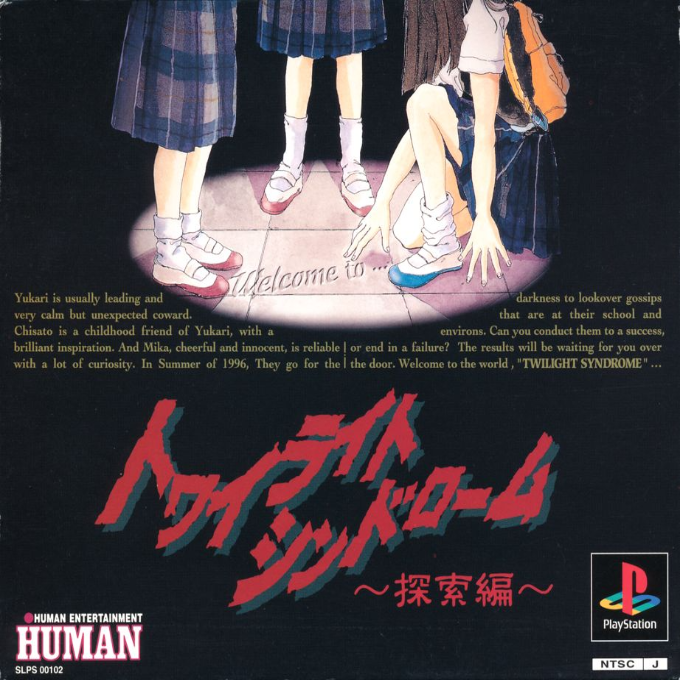
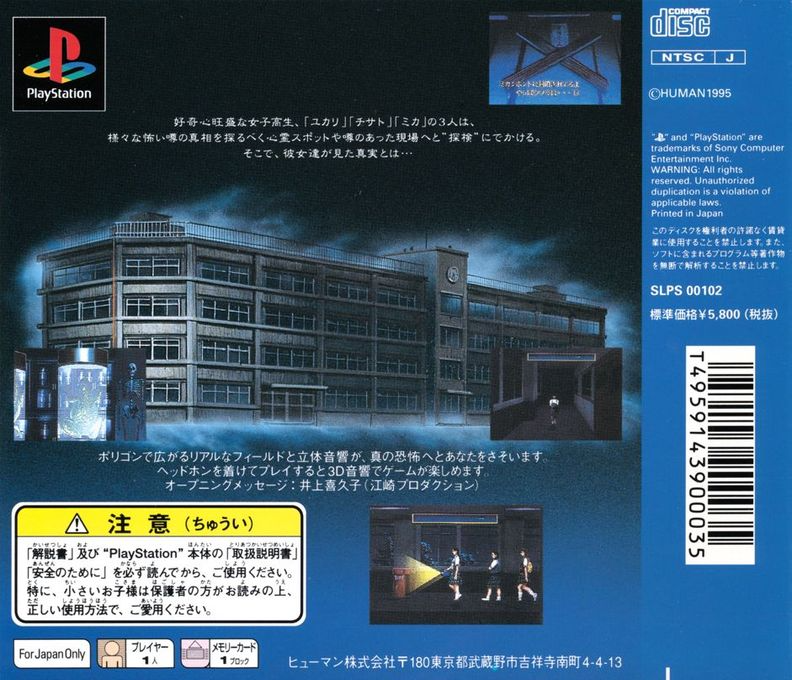
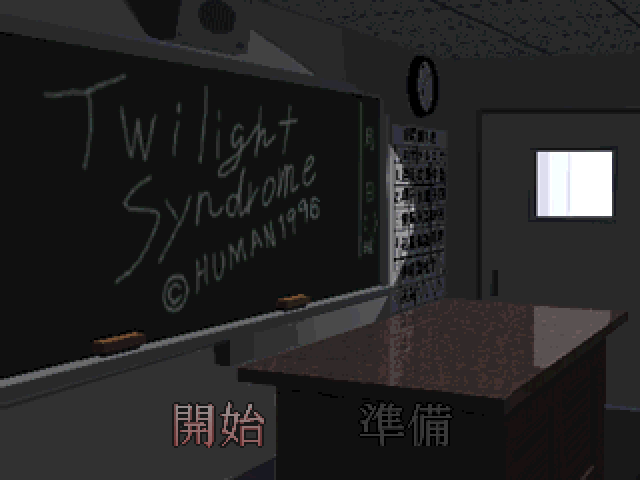
Twilight Syndrome: Tansaku-hen is a PlayStation horror-adventure game released in Japan on March 1, 1996. Developed and published by Human Entertainment, it is the opening release in the Twilight Syndrome series and is also known by the Japanese title トワイライトシンドローム 探索編. The game places its supernatural mysteries in a contemporary Japanese high-school setting, following three students—Yukari Hasegawa, Mika Kishii, and Chisato Itsushima—as their curiosity about local ghost stories turns into a series of unsettling investigations. It remained a Japan-only PlayStation release, making its language-heavy storytelling especially tied to its original setting and audience.
Rather than telling one continuous case from start to finish, Tansaku-hen is structured as a collection of paranormal episodes. The girls hear rumors about strange deaths, suspicious photographs, sounds in empty rooms, and other familiar school legends, then set out to learn what lies behind them. Their investigations extend beyond a simple haunted-house premise: school corridors, classrooms, and nearby locations become places where ordinary routines and ominous gossip overlap. Chisato's sensitivity to spiritual phenomena gives the group a direct connection to the uncanny events they encounter, while the different personalities of the three friends keep the stories rooted in their conversations and shared curiosity.
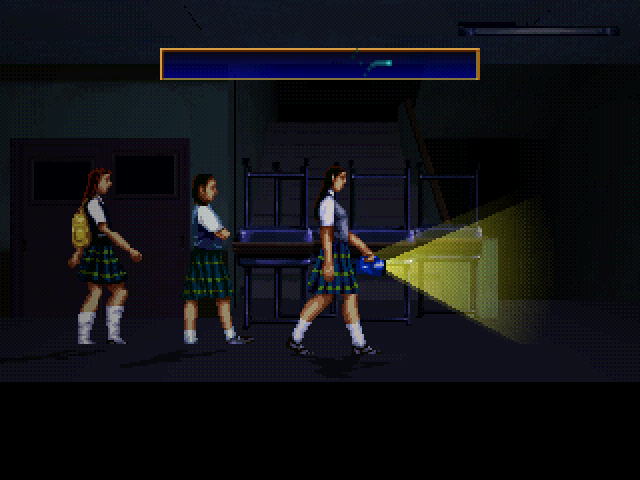
Twilight Syndrome: Tansaku-hen PlayStation gameplay combines on-foot exploration with text-driven decisions. Players guide the characters through side-view areas, with some spaces using a perspective effect that gives hallways and rooms added depth. Progress comes from moving to the right place, following the ongoing dialogue, and choosing responses or actions when the story calls for them. There is no combat system or inventory-management loop; the tension instead comes from investigation, timing, sound, and the consequences of choices. Each scenario can conclude differently, and unsuccessful outcomes can require a retry before later material becomes available.
The presentation deliberately differs from the stylized anime look common in many Japanese adventure games of its era. Digitized performers and photographic imagery place the protagonists against detailed environments, lending the school stories a live-action-adjacent texture. Human also built the experience around 3D audio techniques, using directional effects to make footsteps, voices, and sudden disturbances part of the suspense. A fear indicator reinforces the game’s emphasis on atmosphere. The result is an adventure whose scares are delivered through uneasy spaces and suggestion as much as through the player’s decision points.
Tansaku-hen was originally part of a larger plan that was divided into two PlayStation releases during development. Its companion volume, Twilight Syndrome: Kyuumei-hen, arrived later in 1996 and continued the same overarching story with further scenarios. Goichi Suda, later known for founding Grasshopper Manufacture, served as director on the first two Twilight Syndrome games after joining the project during production. That history makes Tansaku-hen an early entry in a line of Japanese adventure games associated with school legends, supernatural investigation, and an unusually grounded audiovisual style.
The game established the basic identity that later Twilight Syndrome releases would revisit: young investigators, urban rumors, branching outcomes, and sound-led horror. Its original duo of PlayStation volumes is distinct from later entries such as Moonlight Syndrome and the 2000 PlayStation game Twilight Syndrome: Saikai, which take the franchise in different directions. For players exploring Human Entertainment’s catalog or the more atmospheric side of the PlayStation’s Japanese library, Tansaku-hen remains the point where the series’ schoolyard mysteries, episodic structure, and distinctive digital presentation began.
Gallery
Details
- Developer
- Human Entertainment
- Publisher
- Human Entertainment
- Genre
- Other Adventure
- Players
- 1
- Release Date
- March 1, 1996
- System
- PS1