About
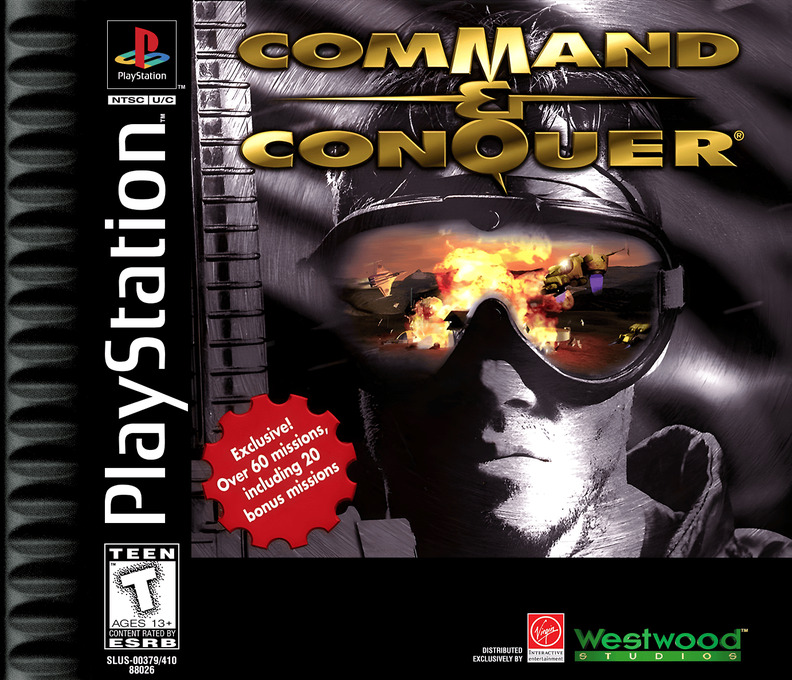
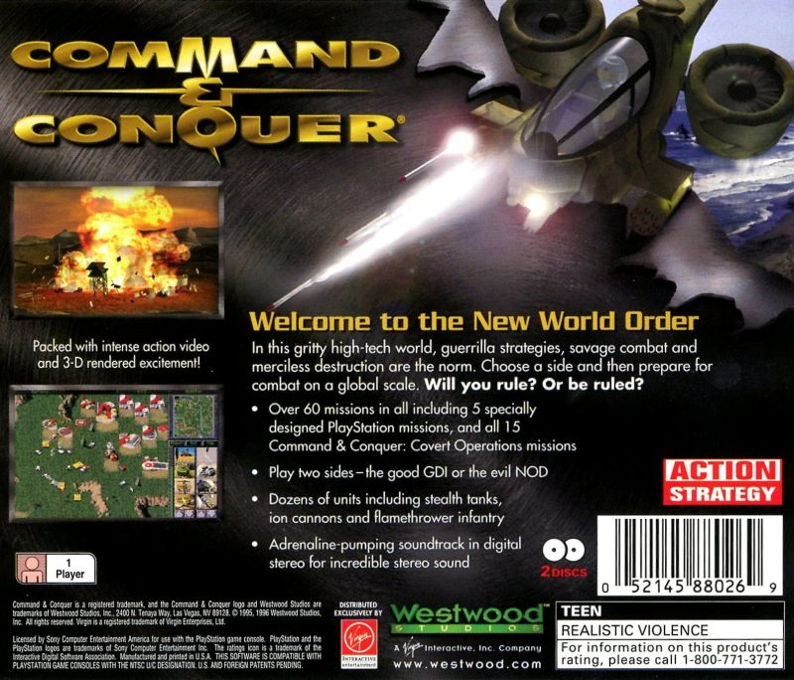
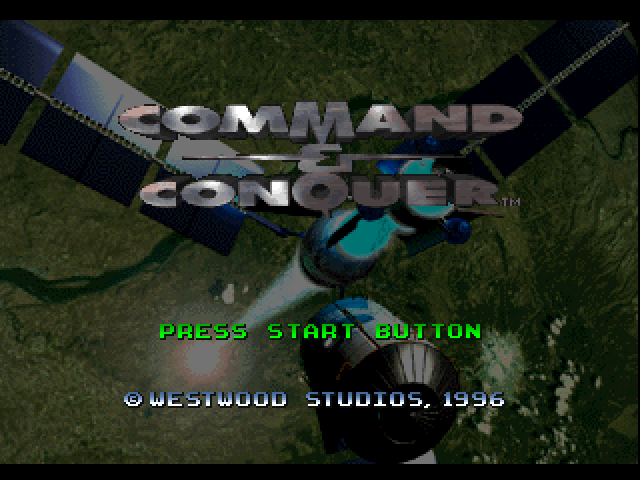
Command & Conquer for PlayStation brings Westwood Studios' landmark real-time strategy game to Sony's 32-bit console. Published by Virgin Interactive Entertainment in 1997, this PS1 edition adapts the 1995 PC original's Tiberium War between the United Nations-backed Global Defense Initiative (GDI) and the Brotherhood of Nod. It is a single-player strategy game built around directing an army in real time, establishing a field base, and outmaneuvering an opposing force across a sci-fi conflict set in a near-future alternate world.
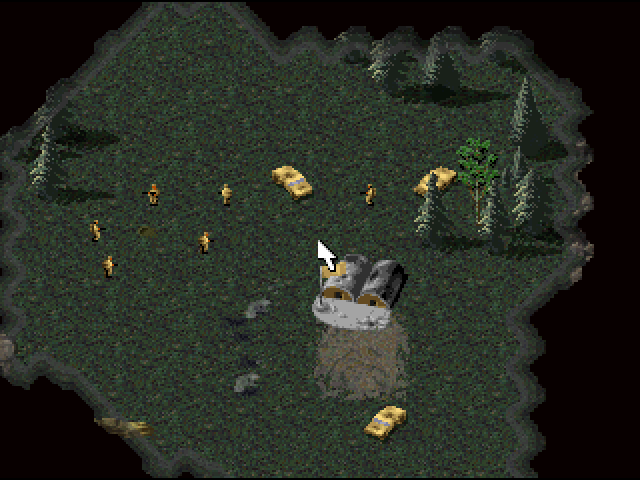
Each battle begins with a limited force or a construction vehicle, depending on the mission. Players move a cursor with the PlayStation controller to select infantry, vehicles, aircraft, and structures, then issue orders to travel, attack, or guard positions. A Mobile Construction Vehicle can deploy into a construction yard; from there, the familiar sidebar interface is used to create power plants, barracks, refineries, factories, defenses, and increasingly advanced military options. Buildings must be placed close to the established base, so deciding where to expand and which routes to protect is an important part of every operation.
Tiberium is the resource at the center of both the fiction and the economy. Harvesters collect the valuable but hazardous mineral from fields and return it to refineries, turning each load into credits for construction and unit production. Power management, storage capacity, repairs, and production prerequisites all influence the pace of a match. GDI generally fields heavier, more durable firepower, while Nod emphasizes speed, cheaper forces, stealthy or unconventional tools, and tactical pressure. The differing rosters give the two sides distinct approaches even when their broad objective is the same: break the enemy force and destroy or seize its base.
The main game offers separate GDI and Nod campaigns, with briefing sequences and full-motion video connecting a succession of missions. GDI operations take the commander through Europe under General Mark Jamison Sheppard, while Nod's campaign follows orders from the enigmatic Kane during its drive across Africa. Campaign maps sometimes present alternate mission choices, and objectives extend beyond straightforward base destruction to include reconnaissance, escort work, defense, rescue, and targeted raids. The live-action presentations, computer displays, and Frank Klepacki's score help frame the action as a military command terminal rather than a conventional menu-driven strategy game.
Westwood's PlayStation conversion is notable for translating a mouse-led PC strategy interface to a gamepad-driven cursor and sidebar. The console release does not include the original computer game's multiplayer mode, but it expands its solo content. Alongside the core campaigns, it contains the fifteen missions from The Covert Operations expansion and six PlayStation-specific Special Operations missions, including a hidden mission. Those additions make this version more than a straight campaign port, while preserving the same central unit selection, resource harvesting, base construction, and real-time combat loop.
Command & Conquer followed ideas Westwood had explored in Dune II and became the opening chapter of the Tiberian branch of the Command & Conquer series. Its accessible selection-and-command controls, opposing faction designs, quick construction system, and cinematic mission briefings made it a defining early expression of real-time strategy. For PlayStation owners, Command & Conquer offers the original GDI-versus-Nod war in a version designed around the DualShock-era console's controller, with a substantial set of missions to command alone.
Gallery
Details
- Developer
- Westwood Studios
- Publisher
- Virgin Interactive Entertainment
- Genre
- Turn-Based Strategy
- Players
- 1
- Release Date
- March 10, 1997
- System
- PS1