About
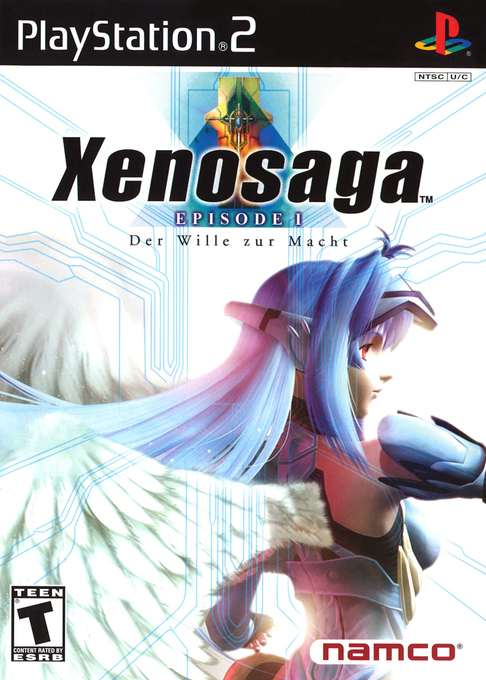
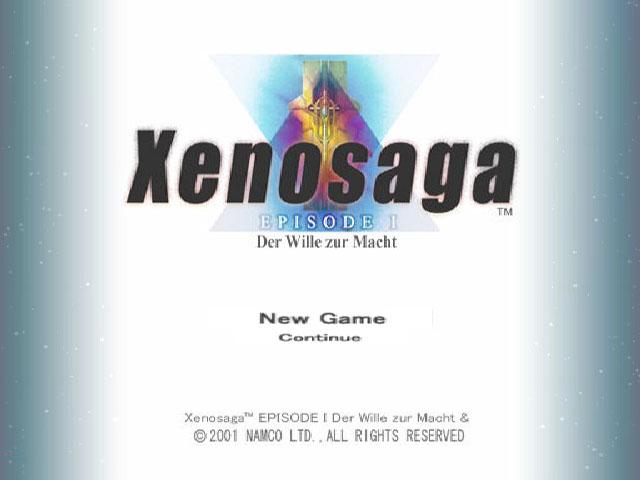
Xenosaga Episode I: Der Wille zur Macht for PlayStation 2 is a story-driven science-fiction role-playing game from Monolith Soft, published by Namco. First released in Japan in 2002 and in North America in 2003, it opens the Xenosaga trilogy and follows a long-form space opera rather than a self-contained adventure. Its title, rendered in German as “The Will to Power,” suits a game concerned with technology, faith, identity, and the choices its characters make as humanity’s future comes under threat.
The story takes place thousands of years after Earth has been lost to human memory and is known only as Lost Jerusalem. Civilization now spans the Galaxy Federation, linked by the U.M.N. network, while the mysterious Zohar remains central to conflicts reaching back to humanity’s expansion into space. Shion Uzuki, a researcher at the powerful Vector Industries, is testing the anti-Gnosis android KOS-MOS aboard the Woglinde when the ship is attacked. The disaster throws Shion into a widening struggle involving the destructive Gnosis, the U-TIC Organization, and factions seeking the secrets tied to Miltia and the Zohar.
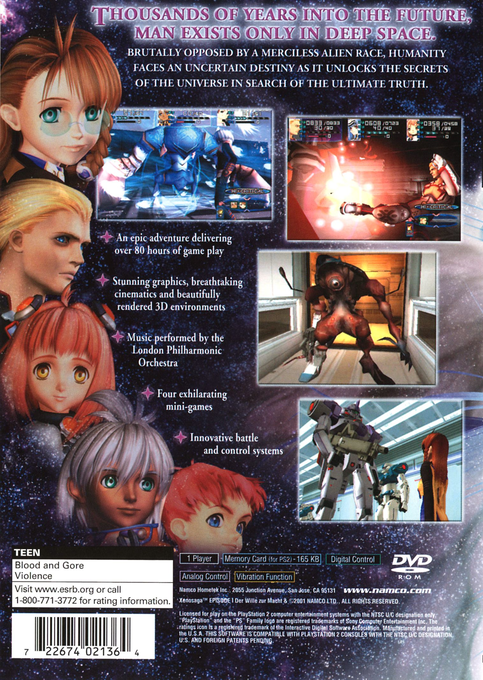
Exploration moves a party through story locations, where players speak with characters, inspect scenery, collect equipment, and uncover optional details through Shion’s database and e-mail functions. Enemy groups are visible in the field, so encounters are not random; players can decide whether to engage and sometimes use nearby objects or positioning to begin with an advantage. The game is structured around extensive cinematic scenes and dialogue, with each new area advancing the central narrative while offering opportunities to stock up, adjust equipment, and prepare the party.
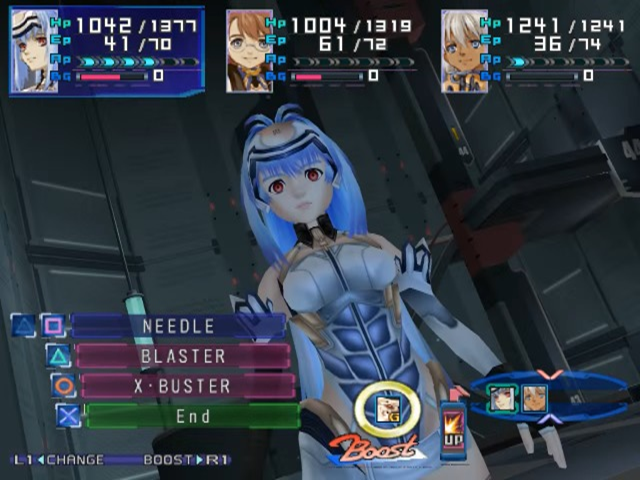
Combat is turn-based and built around timing, resource management, and attack combinations. A three-character group fights on foot, choosing among different attack types, guard commands, items, and Ether abilities. Basic actions build and spend Action Points, making it possible to save up for stronger Tech attacks instead of treating every turn alike. The battle display also shows the next turns and a rotating event bonus, allowing players to plan around extra damage, experience, or other effects. A filled Boost gauge can let a combatant interrupt the order, giving both sides a way to seize a key moment.
Shion is joined by KOS-MOS and a growing cast that includes the reserved chaos, the cyborg Ziggy, the Realian girl MOMO, and members of the Elsa’s crew such as Jr. Character growth uses several distinct point systems: experience raises levels, while Ether, Skill, and Tech points expand abilities or improve existing options. The party can also board A.G.W.S. machines—Anti-Gnosis Weapon Systems—with their own attacks and greater power. These machines are useful against dangerous opponents, but their damage persists after battle, so deploying them is a tactical choice rather than a universal solution.
Xenosaga Episode I was directed and co-written by Monolith Soft founder Tetsuya Takahashi, with scenario work by Soraya Saga; it shares creative connections with the earlier Xenogears while telling a separate story. Character designs by Kunihiko Tanaka and Kouichi Mugitani, mechanical designs including the A.G.W.S., and music by Yasunori Mitsuda give the PlayStation 2 release a distinct identity. The game’s ending leads directly into Xenosaga Episode II, while Episode I itself establishes the major figures, institutions, and unanswered mysteries that define the trilogy’s opening chapter.
Gallery
Details
- Developer
- Monolith Soft
- Publisher
- Namco
- Genre
- JRPG
- Players
- 1
- Release Date
- January 1, 2004
- System
- PS2