About
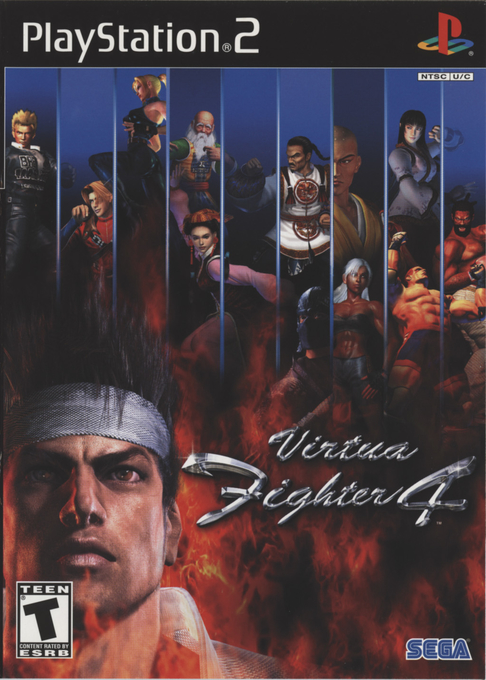
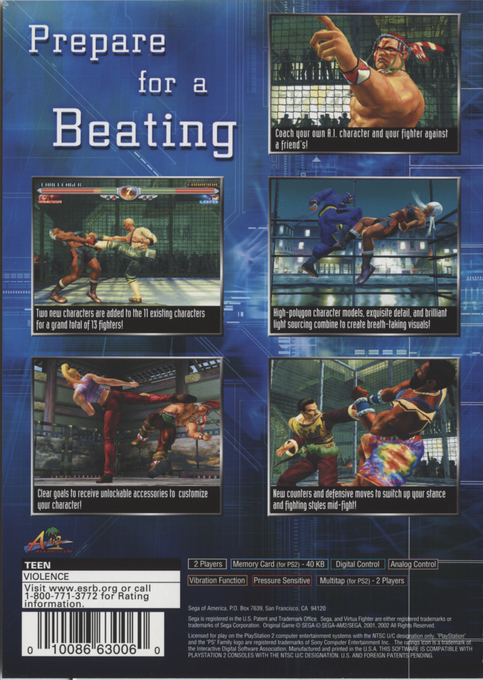
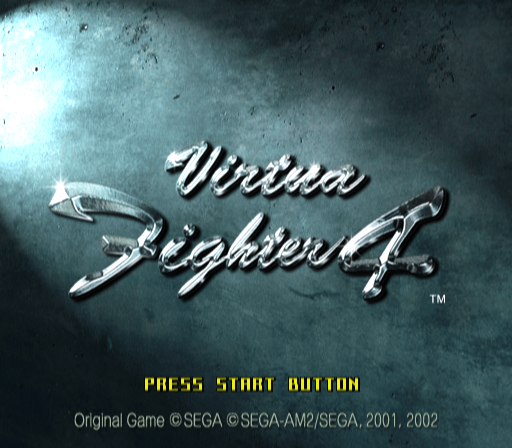
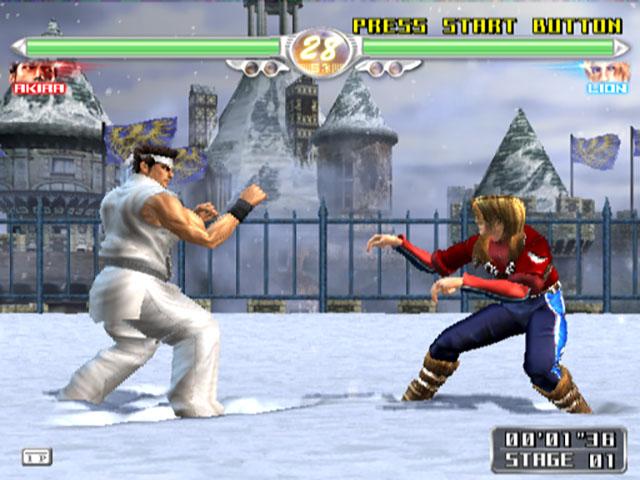
Virtua Fighter 4 for PlayStation 2 is Sega AM2's 3D fighting game, published by Sega in 2002 after its 2001 arcade debut on Sega's NAOMI 2 hardware. The fourth main entry in the Virtua Fighter series brings the World Fighting Tournament back to one-on-one competition built around distinct martial-arts-inspired styles. The PS2 release arrived in Japan in January 2002, followed by North America in March and Europe in May. It is a console adaptation of the original Virtua Fighter 4, rather than the later Virtua Fighter 4: Evolution revision.
A bout revolves around reading an opponent, choosing an attack, throw, guard, or sidestep, and capitalizing on the opening each choice creates. The controls retain the series' economical three-button setup for punch, kick, and guard, with directions and button combinations producing throws, strikes, defensive actions, and character-specific techniques. Timing matters in every exchange: players can evade attacks, escape throws, recover after knockdowns, and use the arena walls to extend pressure. The game returns to flatter, more regular rings than the uneven arenas of Virtua Fighter 3, but ring-outs and differently constructed walls still give each stage its own tactical boundaries.
Virtua Fighter 4 features thirteen selectable fighters. Series regulars include Akira Yuki, Pai Chan, Lau Chan, Wolf Hawkfield, Jeffry McWild, Kage-Maru, Sarah Bryant, Jacky Bryant, Shun Di, Lion Rafale, and Aoi Umenokoji. Two newcomers broaden the roster: Lei-Fei is a Shaolin practitioner whose fighting flows through multiple stances, while Vanessa Lewis uses Vale Tudo-based combat and can switch between separate fighting styles. Dural remains tied to the tournament's larger mystery. The individual movesets make spacing, attack height, throws, counterattacks, and stance transitions feel markedly different from character to character.
The single-player side offers arcade-style battles alongside modes designed to help players understand those systems. Training presents a place to rehearse movement, commands, and combinations, while command-focused exercises walk through a fighter's techniques. Survival challenges players to keep winning against successive opponents. The PlayStation 2 version also includes Kumite, where a player can develop a computer-controlled fighter, adding a longer-term element alongside local versus play. These modes complement the arcade foundations by making the considerable command lists and defensive options more approachable at home.
Its arcade counterpart was also notable for VF.NET, Sega's card-based network service in Japan. Registered arcade players could track results and rank information, and the service helped make Virtua Fighter 4 an early example of connected arcade competition. The home release naturally does not reproduce that arcade card-network experience, but it preserves the tournament-focused fighting and character roster that defined the original version. The PS2 port was one of Sega's early releases for a non-Sega home console following the company's shift away from manufacturing consoles.
Virtua Fighter 4 was followed by Virtua Fighter 4: Evolution, an updated arcade and PlayStation 2 edition that changed the balance, added Brad Burns and Goh Hinogami, and introduced its own features. That later release should not be confused with this original PS2 game, which centers on the thirteen-fighter lineup including Vanessa and Lei-Fei. For players exploring the series, Virtua Fighter 4 marks the point where its precise 3D combat was paired with extensive practice tools and a major arcade-network initiative, while remaining a focused two-player fighting game at its core.
Gallery
Details
- Developer
- SEGA AM2
- Publisher
- SEGA
- Genre
- Fighting
- Players
- 2
- Release Date
- March 17, 2002
- System
- PS2