About
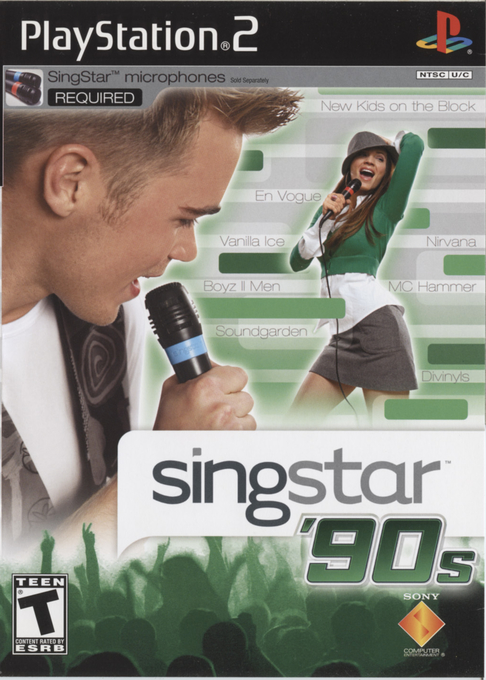
SingStar '90s for PlayStation 2 is a music and karaoke game built around the songs and videos of the 1990s. Developed by London Studio within Sony Computer Entertainment Europe and published by Sony Computer Entertainment, it arrived in Europe and Australia in 2007 before reaching North America in 2008. Like the other PS2 entries in Sony's SingStar series, it turns a living-room performance into a score challenge: players sing into compatible microphones while licensed music videos and on-screen vocal guides play on the television.
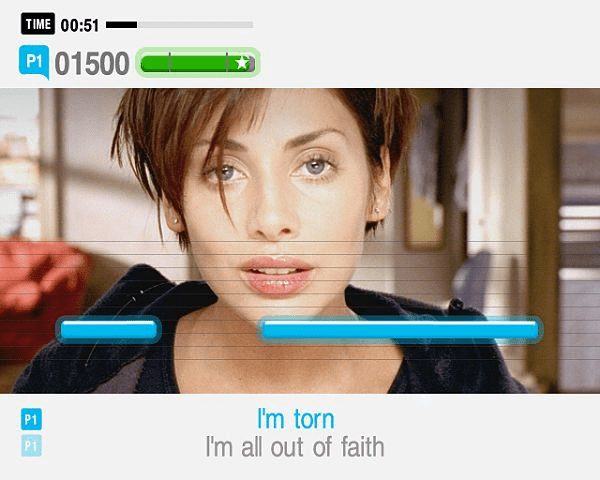
The central task is to follow the melody and timing shown by the game. Lyrics run beneath a pitch display, where bars indicate the notes to aim for; the performance is judged against the song and converted into points. This makes the game approachable whether a player is trying to match a familiar chorus closely or simply joining in at a party. The PlayStation 2 release uses the series' wired microphone setup, with two microphones connected through a USB adaptor, and supports performances for one or two singers at a time in the standard singing modes.
SingStar '90s is designed as a social game as much as a score attack. A singer can tackle a song alone, compete head-to-head, or share vocal parts when a selection is arranged as a duet. Its party options extend participation beyond the two people holding microphones: Pass the Mic-style rounds allow groups to rotate performers and compete in teams, with support for up to eight local players. Rather than building a story or campaign around fictional characters, the game makes the changing playlist, the scores, and the people in the room the focus of progression.
The European track list spans pop, dance, rap, alternative rock, and ballads from across the decade. Selections include All Saints' “Never Ever,” Aqua's “Barbie Girl,” MC Hammer's “U Can't Touch This,” Natalie Imbruglia's “Torn,” Radiohead's “Creep,” R.E.M.'s “Everybody Hurts,” Seal's “Kiss from a Rose,” Spice Girls' “Wannabe,” and Technotronic's “Pump Up the Jam.” The use of original videos gives each performance a visual backdrop tied to the period, while the mixture of solo songs, big choruses, and contrasting styles encourages a varied group session instead of one narrowly defined musical mood.
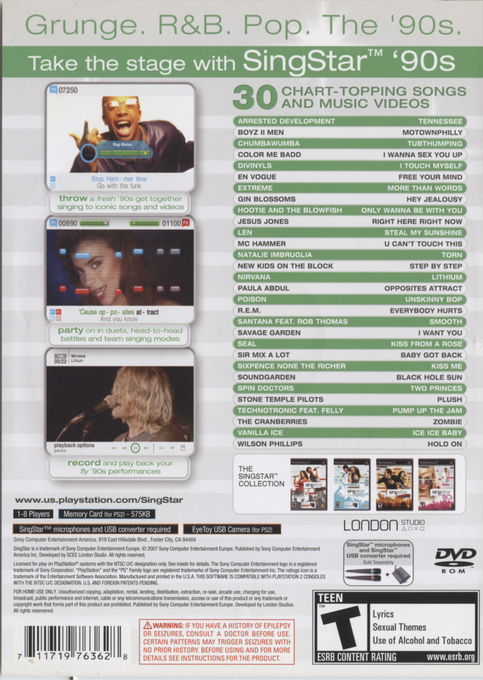
That lineup was not identical everywhere. The European and Australian editions share the international selection, while the North American release substituted a number of tracks to suit its own market. Its disc includes songs such as Arrested Development's “Tennessee,” Boyz II Men's “Motownphilly,” Chumbawamba's “Tubthumping,” and Vanilla Ice's “Ice Ice Baby,” alongside shared choices including the Cranberries' “Zombie” and Divinyls' “I Touch Myself.” The regional editions therefore have the same basic game and decade theme but are distinct releases for players interested in a particular song catalog.
Released late in the PS2's long life, SingStar '90s represents the series' disc-based approach to themed karaoke compilations. It does not require knowledge of other SingStar games to enjoy its set, yet it belongs to a larger format built around collecting music-focused editions. Its appeal comes from the combination of a recognizable decade-specific playlist, immediate pitch-and-rhythm feedback, and a setup that lets a small gathering alternate between singing, spectating, and comparing scores.
Gallery

Details
- Developer
- Sony Computer Entertainment
- Publisher
- Sony Computer Entertainment
- Genre
- Rhythm Game
- System
- PS2