About
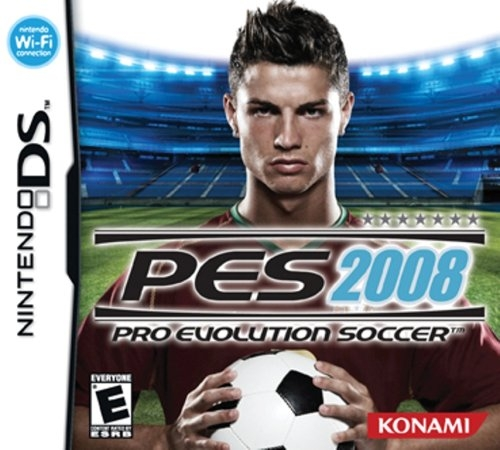
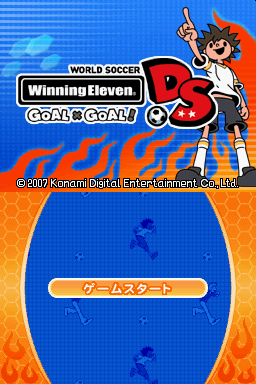
Pro Evolution Soccer 2008 Nintendo DS brings Konami’s football series to the dual-screen handheld as a compact 2007–08 season entry developed and published by Konami. Released first in Japan in October 2007, then in other regions during early 2008, it arrived as Winning Eleven DS: Goal x Goal! in its Japanese home market. This is a dedicated Nintendo DS version rather than a direct copy of the contemporary console releases, built around shorter portable matches, stylus-assisted options, and the series’ familiar emphasis on passing, positioning, and finding space.
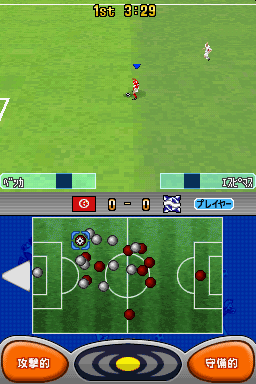
Matches use the DS controls for the essential rhythm of football: move a selected player, pass, shoot, challenge for possession, and send runners forward with the face buttons and directional controls. The shoulder buttons cover functions including sprinting and selected skills, compressing the command set for handheld play. On the pitch, success comes from moving the ball quickly, choosing a passing lane before the defence closes it, and timing a shot or tackle instead of simply advancing in a straight line. The upper screen keeps the game action in view while the touch screen supplies supporting functions rather than replacing the standard match controls.
The stylus is particularly useful between moments of play. Touch-screen commands allow tactical adjustments during a match, letting the player shift the team toward a more attacking or defensive setup when the scoreline demands it. After a goal, the lower display can also be used to alter replay camera angles and speed. These DS-specific interfaces give the player a practical way to make a quick tactical call or inspect a scoring move without turning the football simulation into the pointer-led system used by the separately designed Wii version.
Solo play includes exhibition-style matches alongside cup and league competitions, with a World Tour mode providing a longer route through matches and unlocks. National sides form a substantial part of the selection, while the available club roster is more limited than the larger versions of PES 2008. Winning in World Tour can open classic teams and players through the in-game PES Shop, giving repeat matches a clear purpose beyond a single fixture. The limited editing options apply to selected national teams, so the game keeps its focus on playing and progressing through football challenges rather than offering the broad creation tools associated with some home-console editions.
Multiplayer was an important part of the Nintendo DS package. Nearby players could use wireless play, including game sharing for a head-to-head match from one cartridge, while owners with their own copies could take part in matches with up to four people split into two sides. Wireless communication also supports trading players obtained in World Tour. The game additionally offered two-player Nintendo Wi-Fi Connection matches, with opponent searches that could be narrowed by factors such as location, skill, or registered friends. Those services belonged to Nintendo’s discontinued online infrastructure, but they show how Konami designed this handheld PES for both quick local sessions and connected competition.
Pro Evolution Soccer 2008 Nintendo DS sits within a season when Konami’s series was appearing across very different systems, but its identity is firmly handheld. It does not use the Wii release’s motion-controlled Play Maker approach, and it should not be mistaken for the PlayStation, PSP, PC, or Xbox editions with their different presentations and feature sets. Instead, it adapts the central PES contest of building attacks, protecting a lead, and reacting to changing tactics to the Nintendo DS, with a World Tour progression path and wireless options that suit the system’s portable, social design.
Gallery

Details
- Developer
- Konami
- Publisher
- Konami
- Genre
- Football (Soccer)
- Players
- 1-4
- Release Date
- October 25, 2007
- System
- NDS