About
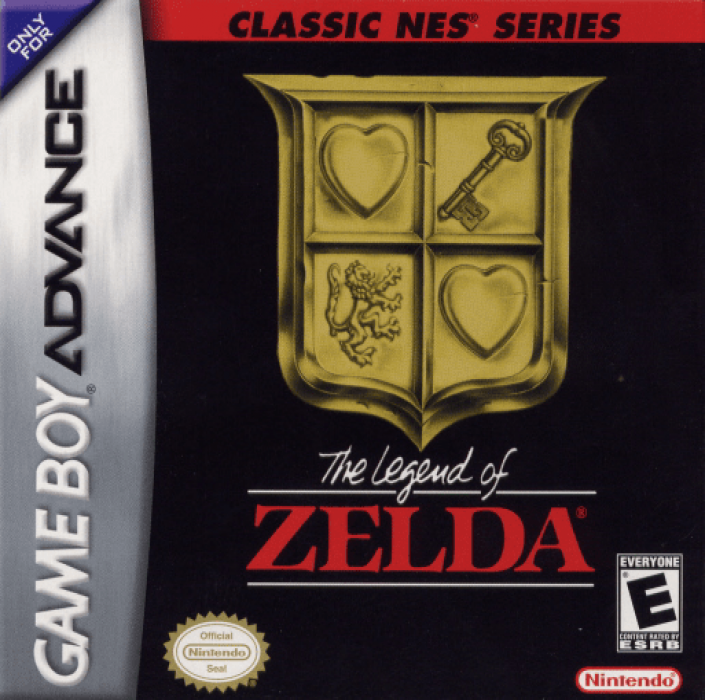
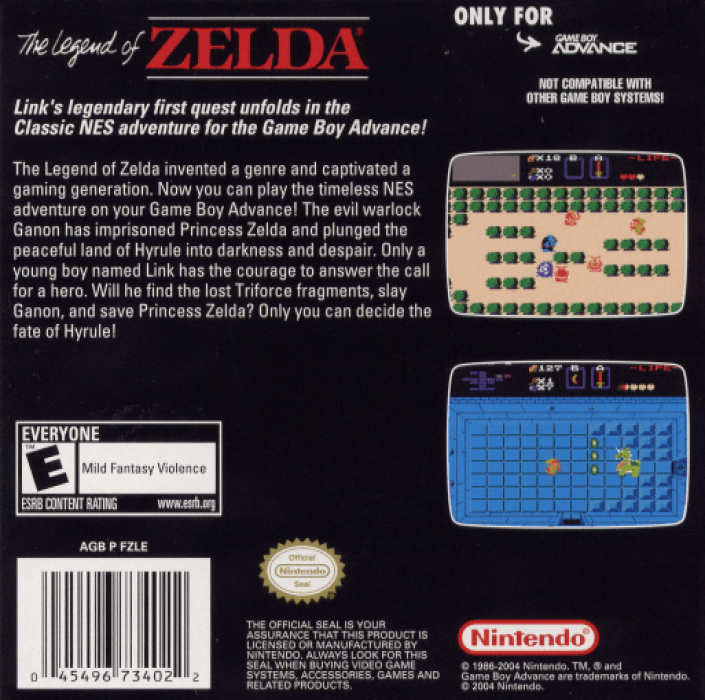
Classic NES Series: The Legend of Zelda is Nintendo’s Game Boy Advance reissue of the original The Legend of Zelda, not a new handheld Zelda adventure or a remake. Nintendo developed the original as Nintendo R&D4 and published the GBA edition under its Classic NES Series label in North America. The database’s June 2, 2004 date corresponds to that North American release; the same cartridge appeared in Europe as NES Classics: The Legend of Zelda on July 9, 2004, and in Australia on November 18. Japan received the related Famicom Mini: Zelda no Densetsu edition earlier, on February 14, 2004.
This is the 8-bit quest first made for the Famicom Disk System in Japan and released internationally on NES, carried to GBA as a mostly faithful emulated game. It should not be confused with the Game Boy Advance’s A Link to the Past & Four Swords or The Minish Cap, both substantially different games, nor with later versions such as Link’s Awakening DX. The Classic NES release preserves the original game’s top-down world, dungeon layouts, enemies, music, and compact sprite-based presentation rather than adding new areas, a revised story, or a new combat system.
Link begins in Hyrule with very little direction and must find a sword before setting out across forests, mountains, coasts, caves, and hostile screens of the overworld. Ganon has taken Princess Zelda and the Triforce of Wisdom has been split into eight fragments. The central goal is to locate those fragments through eight dungeons, then enter the final dungeon, defeat Ganon, and rescue Zelda. The game’s sense of discovery comes from choosing where to investigate, finding concealed caves and passages, and learning which tools open a route or counter a particular obstacle.
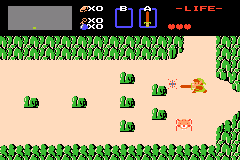
Combat is immediate and simple in concept, but it asks for positioning and timing. The directional pad moves Link; one face button swings the sword while the other uses the currently equipped tool. The Start button opens the subscreen for equipment and status, and Select is used for pausing and menu navigation. Swords, bombs, a boomerang, bow and arrows, candles, potions, and other items serve double duty: they fight enemies, reveal secrets, and solve dungeon problems. Rupees fund useful purchases, while heart containers expand Link’s health.
The cartridge retains the game’s file-based progress system. A player registers a name, selects a file, and resumes from that file after saving; a resumed game begins from the starting position rather than restoring Link to the exact screen where play stopped. That structure suits the original’s deliberate loop of pushing outward from familiar territory, collecting a new item, and using it to reach places that were previously blocked. The game is single-player, even though the broader Classic NES line included titles with link-cable multiplayer options.
Presentation is intentionally old-school: a fixed overhead view, room-by-room scrolling, short text prompts, tile-based landscapes, and the original’s 8-bit visual and audio identity. The GBA edition adapts the display for the handheld screen instead of presenting a newly drawn version, and its small cartridge makes the full quest portable. It also includes minor text cleanup associated with later re-releases, but the essential design remains that of the NES game: exploration before instruction, dungeons built around keys and items, and secrets that reward attention.
For players approaching this specific version, the important context is portability rather than reinvention. It is a 2004 GBA way to play Nintendo’s foundational action-adventure game, with all nine dungeons and its original open-ended structure intact. Its limited guidance, brisk two-button action, cartridge saves, and unembellished 8-bit presentation are features of that historical design, not signs that it is a port of a later Zelda remake.
Gallery
Details
- Developer
- Nintendo
- Publisher
- Nintendo
- Genre
- JRPG
- Players
- 1
- Release Date
- June 2, 2004
- System
- GBA