About
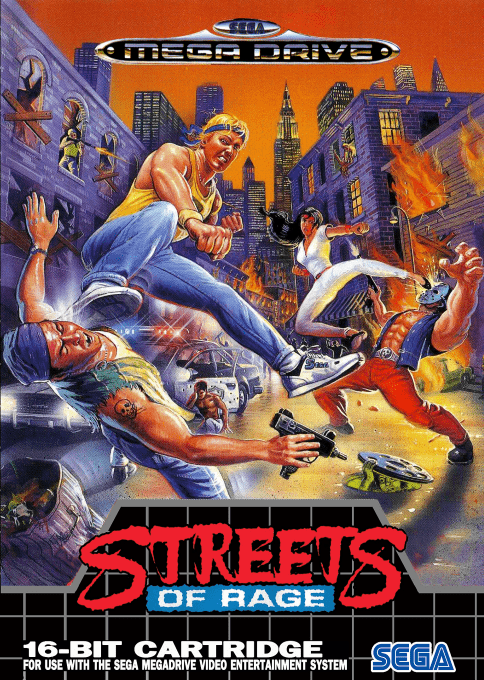
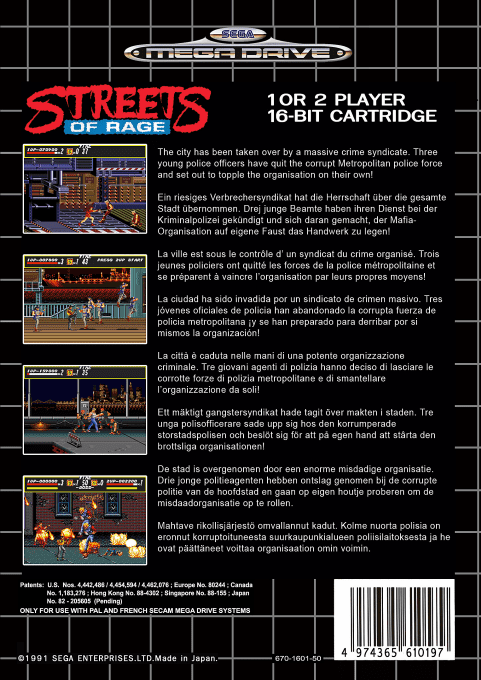
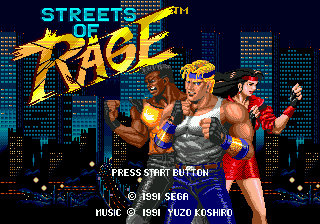
Streets of Rage for the Sega Genesis, known as the Mega Drive outside North America and as Bare Knuckle in Japan, is Sega’s 1991 side-scrolling beat ’em up. Developed and published by Sega, it begins the Streets of Rage series with a fight to reclaim a city overwhelmed by a secret criminal organization. Adam Hunter, Axel Stone, and Blaze Fielding are young police officers whose superiors will not act; they leave the force and take the battle directly to the gangs. The result is a focused 16-bit brawler built around clearing dangerous city blocks one encounter at a time.
Players choose one of the three former officers before starting alone or with a second player in local cooperative play. Each fighter has a different balance of strength, speed, and jumping ability, so the selection changes the rhythm of a run without changing the central mission. The campaign moves through successive areas populated by street gangs and ends each area with a boss confrontation. Defeat the opponents in the current section, keep an eye on the timer and life gauge, and the action scrolls on toward the organization behind the city’s collapse.
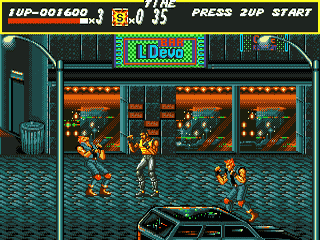
The Genesis controls make room for more than simple punches. A basic attack can be chained into a short combo, while jumping opens up a jumping kick and a simultaneous jump-and-attack input produces a rear attack. Moving close to an enemy automatically initiates a grab, from which the player can strike, throw, flip over an opponent, or attack from behind. These options matter when enemies approach from both sides of the screen, turning positioning and crowd control into a regular part of every fight.
Street weapons and recovery items interrupt that hand-to-hand routine. Weapons can be uncovered by breaking objects or by knocking down armed enemies; they can be used for attacks or thrown, but are lost when the character is hit or grabs somebody. Apples restore part of the life gauge, while beef restores it completely. Extra lives, score cash, and special-attack pickups also appear. The defining emergency option is the Special command: a remaining ally in the police force sends an explosive strike into the area, damaging every enemy on screen. It is normally limited to one use per round unless another special item is found.
Cooperative play gives Streets of Rage a distinct layer beyond two people simply fighting beside one another. A second player may join a solo game already in progress, and partners can use team techniques when they are positioned together. Coordination becomes especially valuable during crowded battles: players can divide a mob, rescue one another from pressure, and decide when to spend their screen-clearing support attack. The menus also provide adjustable difficulty, control configuration, a sound test, and player and life settings, letting the game suit a quick session or a longer attempt to finish the full route.
The original Genesis/Mega Drive release was followed by versions for Sega’s Game Gear and Master System, as well as a Sega CD appearance in a compilation, and it has returned in later collections and digital releases. Its Japanese name, Bare Knuckle, reflects the same game’s regional branding rather than a separate sequel or remake. The first Streets of Rage established the former-officer trio, the criminal-syndicate conflict, cooperative brawling, and the electronic score by Yuzo Koshiro that became closely associated with the series. It remains the starting point for the later Streets of Rage games and a representative Sega brawler from the early 16-bit era.
Gallery
Details
- Developer
- SEGA
- Publisher
- SEGA
- Genre
- Beat 'em Up
- Players
- 1-2
- Release Date
- October 1, 1991
- System
- Genesis/Megadrive