About
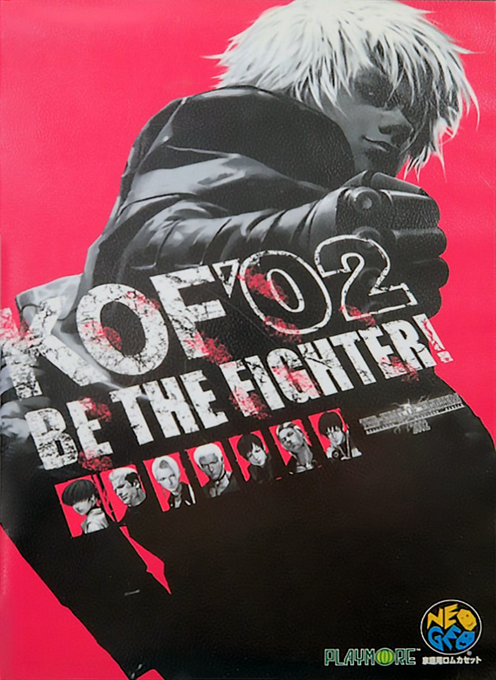
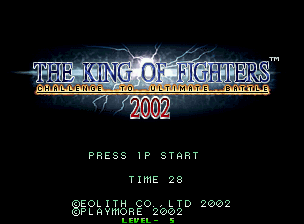
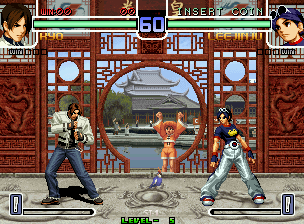
The King of Fighters 2002 Neo Geo is a 2D team fighting game released in late 2002 for SNK’s Neo Geo arcade and home-cartridge hardware. Developed by Eolith with BrezzaSoft’s involvement and issued under the Playmore banner, it is the ninth numbered entry in The King of Fighters series. Rather than continue the story that concluded in the preceding NESTS-era game, this installment is a standalone “Dream Match”: a chance to bring combatants from different points in the series together for an all-star tournament.
Matches return to three-person teams after the four-member Striker format used by the previous three games. Before a bout, each player chooses a squad and its fighting order, then switches to the next member whenever a fighter is knocked out. The usual Neo Geo four-button layout covers punches and kicks of two strengths, while familiar KOF movement, jumping, guarding, throws, command moves, and special-move inputs create the foundation. Victory goes to the side that can eliminate the opposing team, giving both players reason to weigh matchup choices and preserve their strongest combatant for the right moment.
KOF 2002 reworks the series’ Advanced-style Power Gauge around meter stocks that build through combat and special-move use. A team member later in the chosen order can hold more stocks, so the tactical order affects more than the sequence of fighters. Meter supports defensive emergency actions and super moves, but it also fuels MAX Activation. In that limited state, attacks can be canceled into follow-ups and a player gains access to more forceful MAX Super Special Moves; a low-health fighter can risk the demanding MAX2 attack. Quick Emergency Evasion and Quick MAX Activation add further ways to spend resources during the pressure of a match.
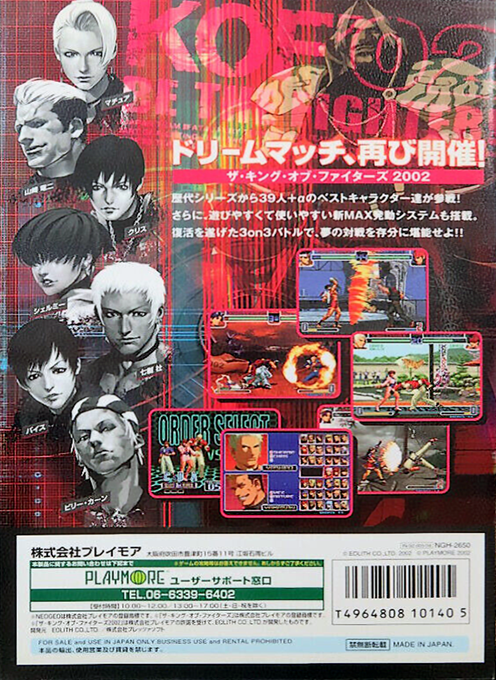
The Neo Geo roster gathers 39 standard fighters and several unlockable selections from across The King of Fighters history, including representatives of the Orochi and NESTS periods alongside long-standing faces such as Kyo Kusanagi, K’, Terry Bogard, and Ryo Sakazaki. Teams mix recurring groups with combinations associated with the series’ earlier yearly entries, while Omega Rugal serves as the computer-controlled final obstacle. Because the game is a Dream Match, its appeal rests on these cross-era confrontations rather than a new canonical plot or a tournament narrative tied to one faction.
Arcade play is built around head-to-head competition, and the Neo Geo home version offers the same compact 2D battle focus through cartridge hardware. Its hand-drawn character sprites and stages retain the distinctive visual language of the late Neo Geo library, with animations and moves adjusted for this entry. The absence of Strikers makes every active fighter directly responsible for offense and defense, while the return to three-person squads emphasizes character selection, order, meter management, and the timing of a comeback.
It is important to separate this original Neo Geo game from its later adaptations. The Dreamcast, PlayStation 2, and Xbox releases introduced platform-specific roster additions not present in the Neo Geo original, including King and Shingo in the Dreamcast edition and further guests in later console versions. The King of Fighters 2002 Unlimited Match, released years afterward, is an expanded remake rather than the 2002 cartridge game. The original remains a self-contained Dream Match entry whose three-on-three structure and MAX-based system define its place in the long-running SNK fighting series.
Gallery
Details
- Developer
- SNK
- Publisher
- SNK
- Genre
- Fighting
- Players
- 1-2
- Release Date
- December 18, 2002
- System
- Neo Geo