About
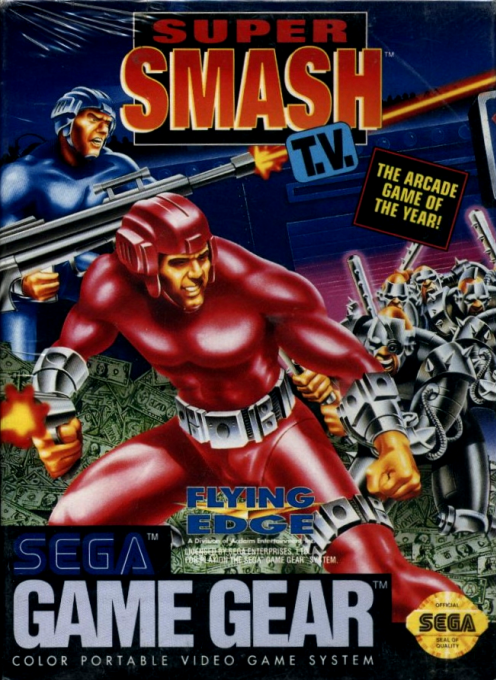
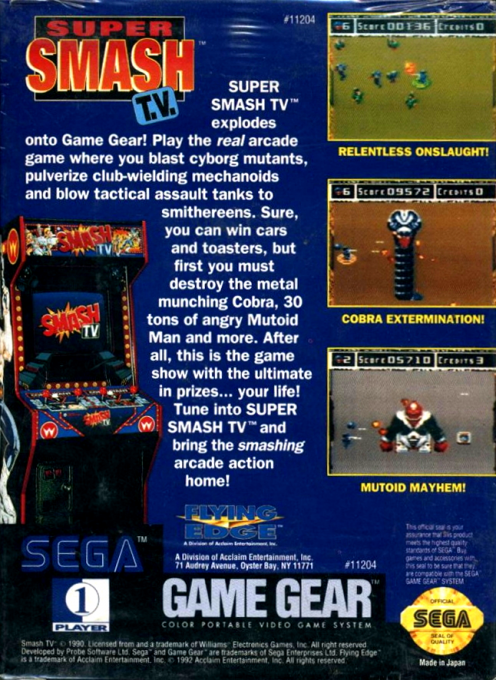
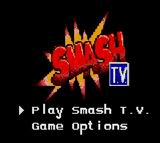
Super Smash T.V. for Sega Game Gear is a 1992 handheld version of Williams Electronics' arcade shooter Smash TV, adapted by Probe Software and published by Flying Edge. Set in the then-near future of 1999, it presents a deliberately excessive televised survival contest in which a lone contestant enters a succession of lethal arenas for cash, prizes, and the title of grand champion. The Game Gear release carries the Super Smash T.V. name used by several Sega home versions, while retaining the original game's darkly comic game-show premise and top-down, room-by-room action.
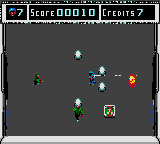
Each arena is a self-contained firefight. The contestant starts with a rapid-fire weapon and must clear waves of attackers before exits open to the next area. Enemies enter from the edges of the screen, pushing the player to keep moving while watching every approach. Money and gift-wrapped prizes appear amid the danger, and collecting them fits the fiction of a ruthless broadcast in which survival and reward are inseparable. Temporary weapon upgrades can improve the player’s chances, while boss encounters provide major obstacles at the ends of the game's stages.
The concept comes from the 1990 arcade game designed by Eugene Jarvis and programmed by Mark Turmell, a successor in spirit to Jarvis's Robotron: 2084. Like that earlier game, Smash TV is built around the tension between movement and shooting: staying in one place invites a swarm, but running blindly can carry the contestant into another threat. The arcade cabinet used two joysticks so that players could move in one direction and fire in another. That direct twin-stick arrangement was a defining feature of the original, and it shaped the design of every home conversion.
On Game Gear, the compact hardware requires a different solution. The portable has a directional pad and two face buttons rather than twin joysticks or a four-button shooting cluster, so Super Smash T.V. uses selectable control arrangements to manage movement and firing direction. This makes it a distinct version rather than simply the arcade game on a smaller screen: choosing when to alter the firing angle matters alongside dodging enemies and collecting items. The Game Gear edition is single-player, unlike versions that offer cooperative play, which puts the entire arena-clearing challenge on one contestant.
The satirical setting gives the shooting a recognizable frame. A hostile television host oversees the contest as players pass through its staged environments, while the promised rewards range from piles of cash to conspicuous consumer prizes. The idea draws on the media-saturated dystopian mood popular in late-1980s science fiction, but the game keeps its story concise and its focus on immediate action. Progress is defined by surviving rooms, choosing available exits, finding useful pickups, and eventually confronting the show’s larger threats.
Super Smash T.V. belongs to a broad wave of early-1990s arcade conversions that brought well-known coin-op ideas to home systems with very different input layouts and display limits. Probe’s Game Gear version preserves the basic arena-shooter structure, the futuristic game-show setting, and the pressure of continuous enemy waves for players looking for Smash TV on Sega’s handheld. It also sits alongside the Genesis, Master System, NES, Super NES, and computer versions as one of several contemporary interpretations of Williams' original. The game’s lasting identity remains its blend of frantic single-screen combat, prize collecting, and a knowingly outrageous vision of televised entertainment.
Gallery
Details
- Developer
- Probe Software
- Publisher
- Flying Edge
- Genre
- Shoot 'em Up
- Players
- 1
- Release Date
- September 1, 1992
- System
- Game Gear

/Shining_Force_Gaiden_Final_Conflict.png)