About
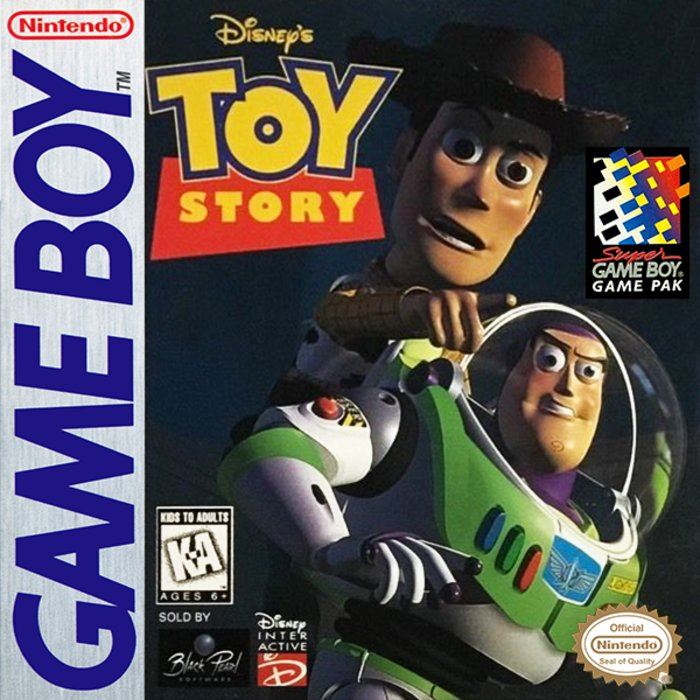
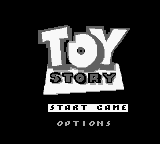
Toy Story for Game Boy is a 1996 side-scrolling platform game based on Disney and Pixar's animated film. Developed by Tiertex Design Studios and published in North America by Black Pearl Software, this handheld version follows Woody after the arrival of Buzz Lightyear upsets the balance in Andy's bedroom. It shares the film-inspired premise of the better-known console releases, but it is its own compact Game Boy adaptation, built around ten stages and a straightforward one-player adventure.
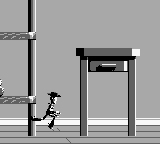
Woody is the playable lead for most of the game. The Control Pad moves him left and right, lets him duck beneath hazards, and handles special situations, while the A Button makes him jump. His pull-string is central to the platforming: with the B Button, Woody can briefly tie up troublesome toys or catch hooks and swing over gaps. That creates a recurring rhythm of watching enemy placement, timing jumps, and using a swing at the right moment rather than simply running to the end of every screen.
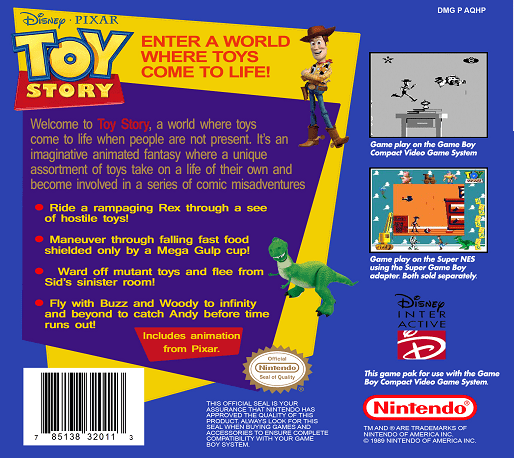
The Game Boy Toy Story campaign condenses the movie's storyline into objectives that vary from level to level. In Andy's room, Woody sends the Green Army Men on their birthday reconnaissance mission, then has to help wandering toys get back to safety before Andy returns. Another early challenge asks him to keep pace with Buzz, while the fallout from Buzz's accidental trip out the window turns the other toys against Woody. The action continues through Pizza Planet and into Sid's home as Woody attempts to find Buzz and put things right.
Several stages give the familiar platform formula a different focus. A timed sequence has Woody free and guide Hamm, the Robot, and Rex back to the toy box in a required order. In Run Rex, Run, Woody rides the anxious dinosaur while the player changes Rex's pace and avoids hazards such as paratroopers and R. C. The later sections send Woody through Pizza Planet's clutter, the claw machine, and Sid's dangerous workbench. The manual also identifies a confrontation with Sid's mutant toys and a final aerial sequence involving Buzz, so the game moves through key locations and situations from the film instead of remaining in one setting.
Survival is measured with star-shaped health and cowboy-hat tries. Hits remove health, while falling from the screen or losing all remaining stars costs a try. Tin stars, gold stars, cowboy hats, and continue flags reward exploration or provide a little protection against setbacks; flags return the player to reached points within a stage. These systems make careful movement useful even in a small cartridge adventure, particularly when a level mixes enemy avoidance, low obstacles, and gaps that require a lasso swing.
Toy Story on Game Boy arrived after the 1995 film and during the wider cross-platform game release, but its production credits distinguish it from the Genesis and Super NES versions. Tiertex handled the Game Boy development, with Gary Ireland credited as programmer and Mark Ortiz credited for music, while Black Pearl Software published the North American release. The cartridge can also be used with Nintendo's Super Game Boy accessory, where it was designed to display enhanced graphics. For players looking for the Toy Story Game Boy experience specifically, that version's ten-stage structure, Woody-focused controls, and handheld reinterpretation of the film are the important details.
Gallery
Details
- Developer
- Black Pearl Software
- Publisher
- Tiertex
- Genre
- Platformer
- Players
- 1
- Release Date
- January 1, 1996
- System
- GB