About
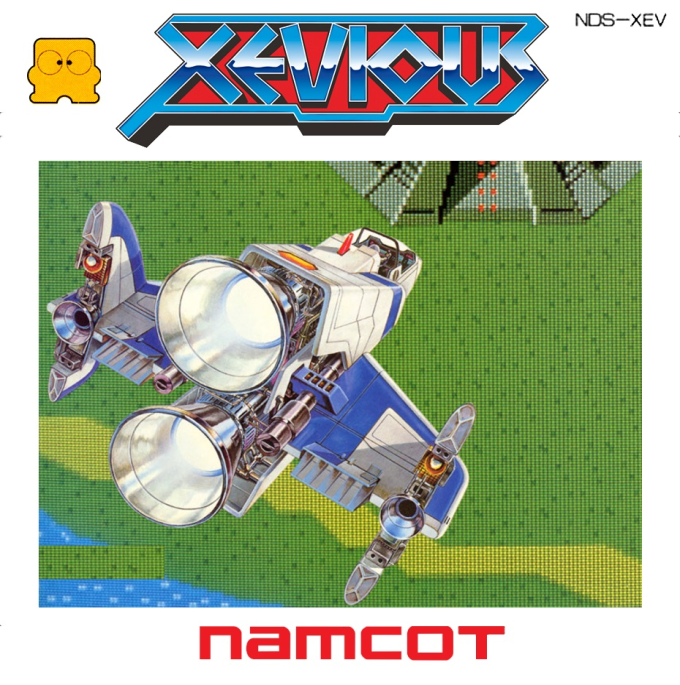
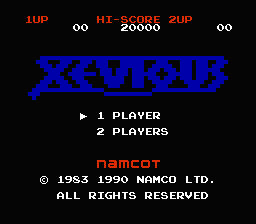
Xevious for the Famicom Disk System is Namco’s vertical-scrolling shooting game, issued in Japan on May 18, 1990 through the Disk Writer service. This release revisits the company’s celebrated 1983 arcade game through its earlier Family Computer conversion, placing players in command of the Solvalou craft against the forces of Xevious. It is a single-player arcade-style challenge built around steadily advancing overland stages, where quick reactions and careful reading of enemy patterns matter as much as raw firepower.
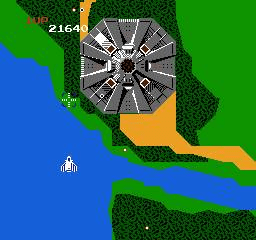
The Solvalou carries two complementary weapons. Its zapper fires straight ahead to deal with airborne attackers, while its blaster drops bombs on objects below. A targeting sight projected ahead of the ship indicates the bomb’s landing point, making the game’s split between air and ground threats central to every encounter. Fighters, projectiles, installations, and vehicles demand different positioning, so players must weave through the scrolling landscape while continually switching their attention between the two layers of action.
The journey moves through connected areas with changing terrain, including forests, rivers, roads, and large mechanical features. Rather than presenting isolated screens, Xevious lets these landscapes scroll continuously as hostile formations and ground defenses enter from above. The route eventually cycles back after its full sequence of areas, while enemy pressure grows as play continues. Losing a Solvalou can also return the player to a later area’s opening, keeping progress moving but leaving little room for careless flying.
Xevious hides additional targets within its scenery. Bombing the correct points can expose Sol Citadels, and the bomb reticle provides a visual clue by changing color over a valid ground target. Players can also find Special Flags for extra lives. These secrets give repeated runs a layer beyond survival and scoring: learning where targets appear and when dangers arrive becomes part of mastering the game’s long course. Encounters with the Andor Genesis mothership further break up the normal waves, challenging the player to attack its vulnerable components while avoiding its barrage.
Namco developed and published Xevious, and the game became one of the company’s defining early shooting games. Its 1990 Famicom Disk System edition is specifically a reissue of the Famicom version, not Super Xevious, the puzzle-oriented Super Xevious: GAMP no Nazo, or one of the later Fardraut games. That context is important for this release: it preserves the original Solvalou mission and its two-weapon design rather than introducing the additions associated with those related titles.
The Famicom Disk System version offers a Japanese home-system route to a landmark Namco shooter whose arcade debut was noted for combining a scrolling battlefield, detailed backgrounds, and a fictional setting. Its appeal lies in the tension between memorized routes and on-the-spot movement: a player can recognize a threatening formation or a hidden ground objective, but still needs precise control to survive it. For players exploring classic Famicom Disk System shooters, Xevious remains a direct, pattern-driven mission built around the distinctive rhythm of zapping the sky and bombing the ground.
Gallery

Details
- Developer
- Namco
- Publisher
- Namco
- Genre
- Shoot 'em Up
- Players
- 1-2
- Release Date
- May 18, 1990
- System
- FDS
/Yume_Koujou_Doki_Doki_Panic.png)
/Metroid.png)