About
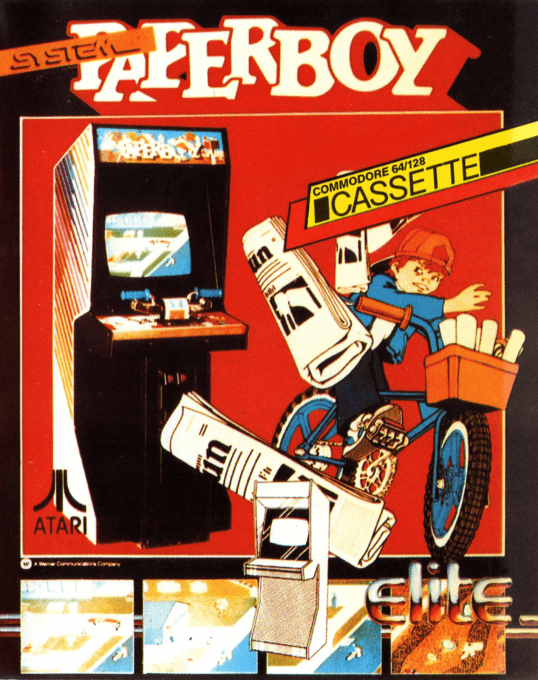
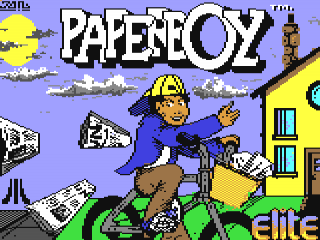
Paperboy for the Commodore 64 is Elite Systems’ 1986 home-computer conversion of Atari Games’ arcade action game. It turns an ordinary newspaper round into a fast, diagonal-scrolling challenge: a young carrier pedals through an American suburb, attempting to deliver The Daily Sun to the right homes while keeping balance amid an increasingly unruly street. The C64 release belongs to the first wave of Elite’s licensed conversions and preserves the arcade game’s central mix of cycling, aiming and split-second route decisions in a single-player format.
Each round represents a day of the week. Before setting off, the player is shown which houses subscribe; successful deliveries must be aimed toward their doors or mailboxes as the bicycle rolls past. Missing a customer—or damaging that customer’s property—costs a subscription, so the job is more than simply staying alive. A perfect round can restore a subscriber for the next day, while losing every customer ends the game. The route grows more demanding over its seven-day run, making reliable delivery as important as chasing a large score.
On Commodore 64, Paperboy uses joystick port 2. Directional input controls the bike’s pace and position on the road, while the fire button throws a newspaper. This makes the game a continuing judgment of timing: ride near enough to make a delivery, leave room to dodge trouble, and decide when it is safe to reach for supplies. The carrier can hold only a limited bundle of papers, but additional bundles placed along the pavement replenish the stock. Careless shots may be costly, since the same papers needed for customers can also be spent pursuing bonus targets.
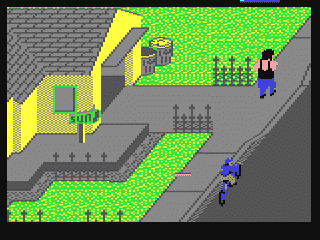
The neighbourhood is deliberately chaotic. Cars, workmen, dogs, lawnmowers, rolling tyres and other moving obstacles can knock the rider off the bicycle and take a life. Houses without subscriptions offer a mischievous alternative use for newspapers: hitting windows, garden objects and other targets earns breakage bonuses. That temptation is balanced against the practical need to save papers for the delivery list. The bright subscriber houses and darker non-subscriber properties give the scrolling street a readable visual code while the player reacts to hazards arriving from different directions.
Reaching the end of a route leads to an obstacle-course bonus section rather than a quiet finish. Here the player can score by hitting targets and using ramps, and a crash ends the bonus run without costing a life. The changing rhythm between delivery street and practice course gives every completed day a short opportunity to recover points before the next route becomes tougher. The manual’s premise and controls were shared across several Elite computer editions, but the Commodore 64 version has its own conversion team: Chris Harvey and Neil Bate are credited for development, with music by Mark Cooksey.
Paperboy began as an Atari arcade game and depended on a distinctive angled view and custom bicycle-handlebar controls. Elite’s C64 edition necessarily translates that experience to a conventional joystick, but it retains the unusual perspective, suburban setting and unusually physical throwing mechanic that made the original stand out. It arrived alongside versions for other British home computers and reflects the mid-1980s market for arcade games adapted to home hardware. Later versions and the 1991 sequel Paperboy 2 broadened the series, yet this Commodore 64 Paperboy remains a specific 8-bit interpretation of the original delivery-round formula.
Gallery
Details
- Developer
- Atari
- Publisher
- Elite Systems
- Players
- 1
- Release Date
- January 1, 1986
- System
- Commodore 64