About
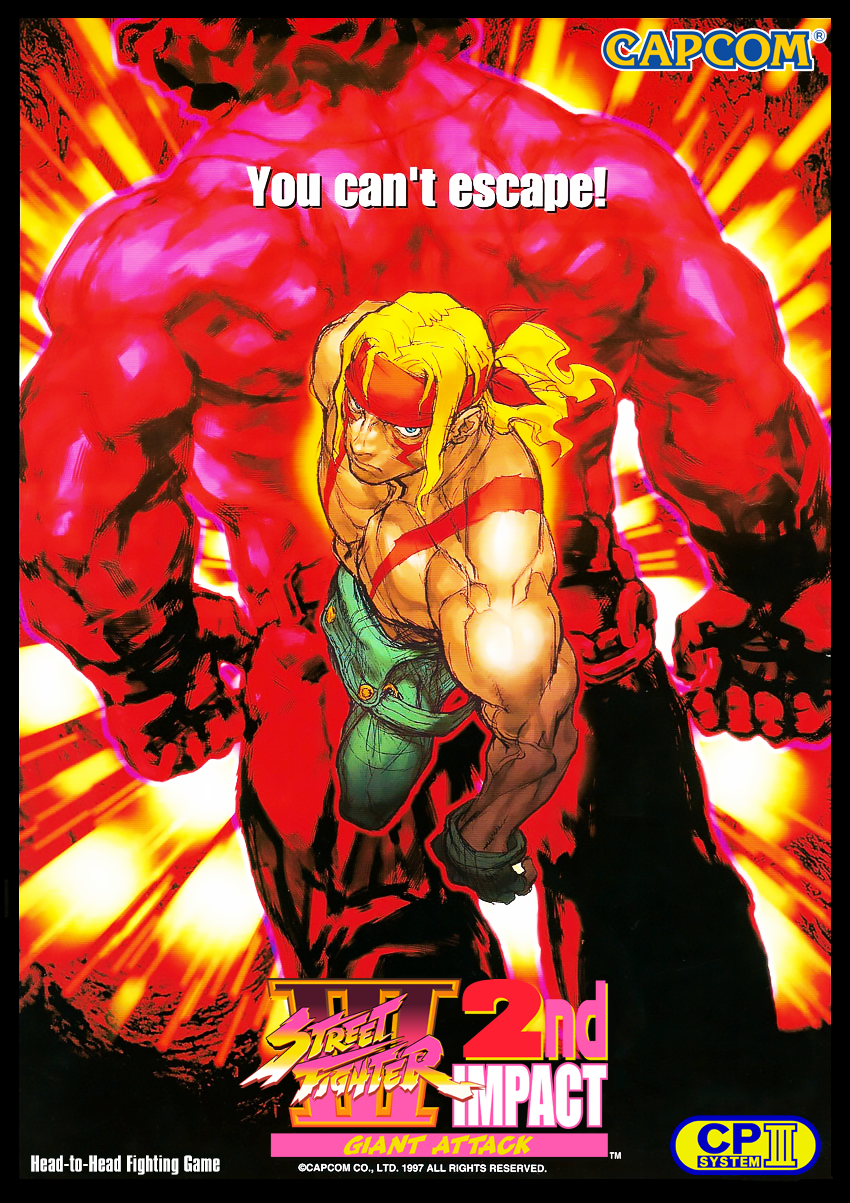
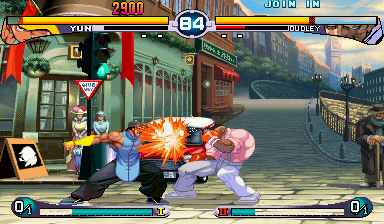
Street Fighter III: 2nd Impact - Giant Attack is Capcom's late-1997 CPS3 arcade fighting game and the direct follow-up to Street Fighter III: New Generation. Built around fast one-on-one bouts and the six-button Street Fighter control layout, it refines the foundation of its predecessor rather than replacing it. Players choose a fighter, face rivals across richly animated 2D stages, and try to empty an opponent's life bar through well-timed attacks, throws, special moves, and Super Arts.
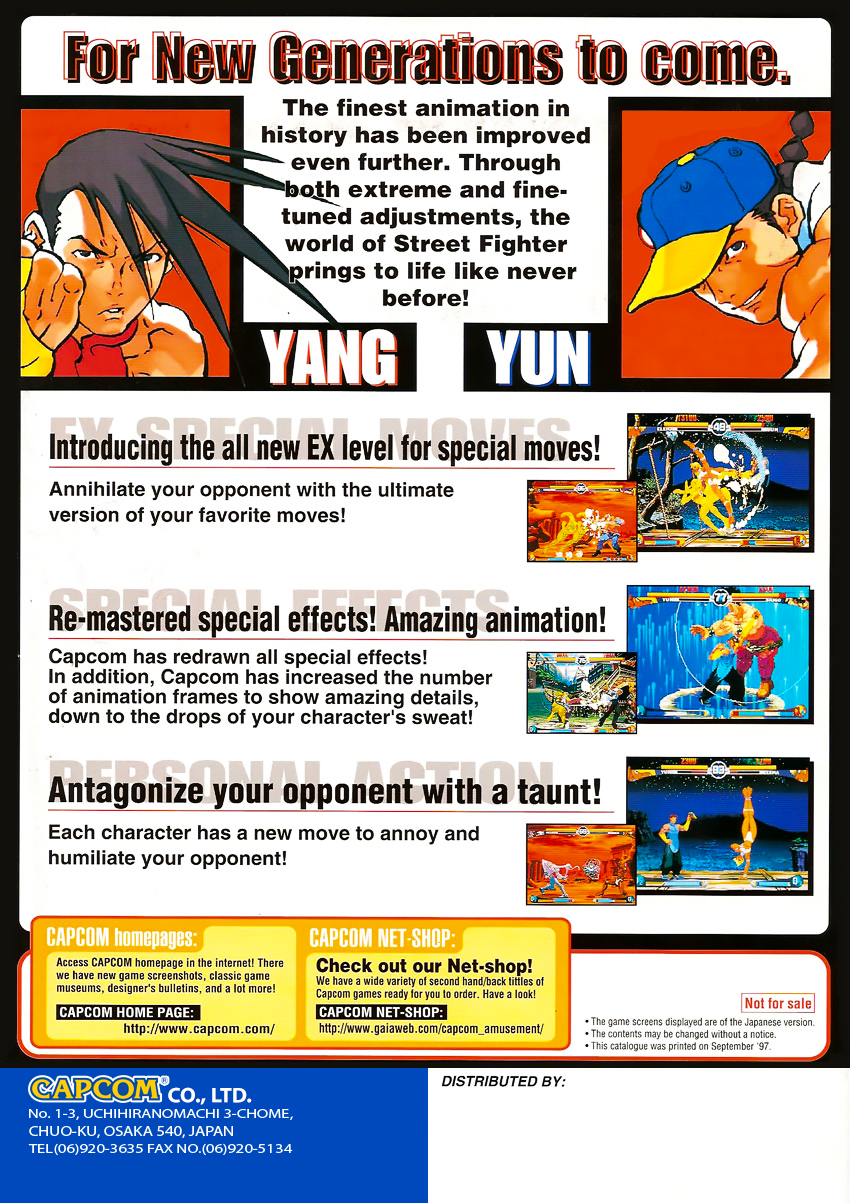
The central mechanics remain the distinctive Street Fighter III mix of offense and defense. Standard punches and kicks establish spacing and open combo opportunities, while motion inputs and attack buttons produce each character's special techniques. Successful attacks and other actions build the Super Art gauge; before a match, players select one of several Super Arts to determine the powerful move available when that meter is filled. 2nd Impact also adds EX Specials, stronger versions of regular special moves that spend part of the gauge, giving players another decision between immediate advantage and saving meter for a Super Art.
Parrying is still one of the game's defining systems. Instead of only blocking an incoming strike, a precisely timed forward input against high or mid attacks, or a downward input against low attacks, can deflect it and create a chance to counter. This makes projectile pressure, jump-ins, and predictable strings riskier, while rewarding timing and familiarity with an opponent's options. The update further introduces throw teching, letting a player escape an attempted throw with the right response, and personal actions: character-specific taunts that can confer a temporary benefit when completed.
The roster carries over the new generation of fighters from the first Street Fighter III and expands it with Hugo and Urien, while Akuma appears as a secret selectable combatant. Yun and Yang, previously closely linked in their move sets, are differentiated here with their own special moves and Super Arts. Hugo brings an enormous wrestler's reach and command-grab style to the lineup, whereas Urien fights with attacks involving electricity and metal. In the arcade single-player path, dialogue exchanges and character-specific encounters frame a run through opponents, with conditions that can lead to battles against Akuma and the more formidable Shin Akuma.
Giant Attack also restores a kind of bonus round absent from the series since Super Street Fighter II. After the third computer-controlled match, the Parry the Ball challenge sends basketballs toward the player for a focused exercise in the timing of Street Fighter III's defensive technique. Along with adjustments to move properties, animation, damage behavior, and Super Art meter rules, these additions make 2nd Impact a substantial arcade revision rather than a simple roster update. Capcom staff later explained that the Giant Attack subtitle reflected the imposing new characters Hugo and Urien.
Originally released for Capcom's CP System III arcade hardware, Street Fighter III: 2nd Impact - Giant Attack was later paired with New Generation in the 1999 Dreamcast compilation Street Fighter III: Double Impact, called Street Fighter III: W Impact in Japan. The compilation added home modes including training and versus play, and made previously computer-controlled Gill and Shin Akuma available under its own conditions. 2nd Impact was followed in arcades by Street Fighter III: 3rd Strike - Fight for the Future, but it remains an important snapshot of Capcom's rapidly evolving Street Fighter III design: a CPS3 fighter where character expansion, parry-based defense, and meter choices all shape every round.
Gallery
Details
- Developer
- Capcom
- Publisher
- Capcom
- Genre
- Fighting
- Players
- 1-2
- Release Date
- September 30, 1997
- System
- CPS3