About
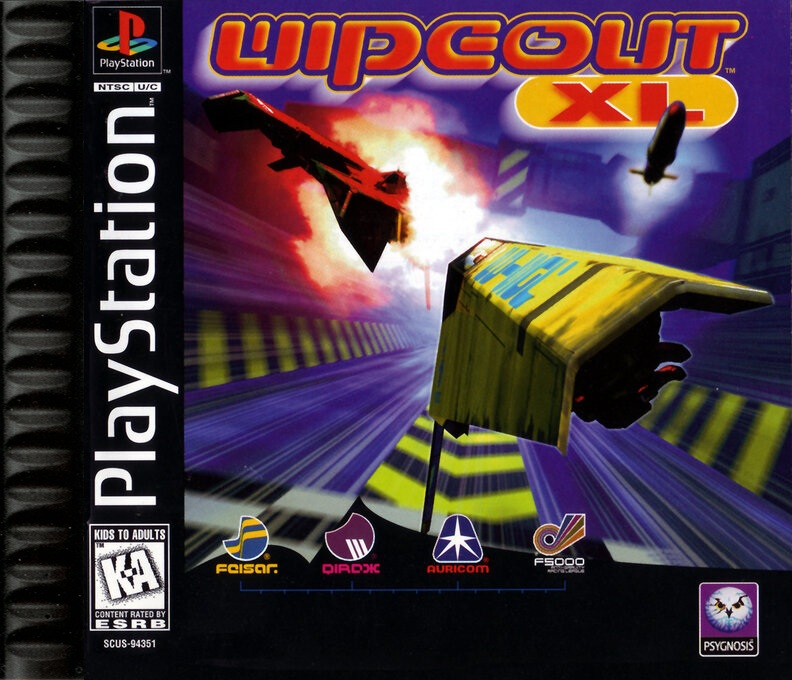
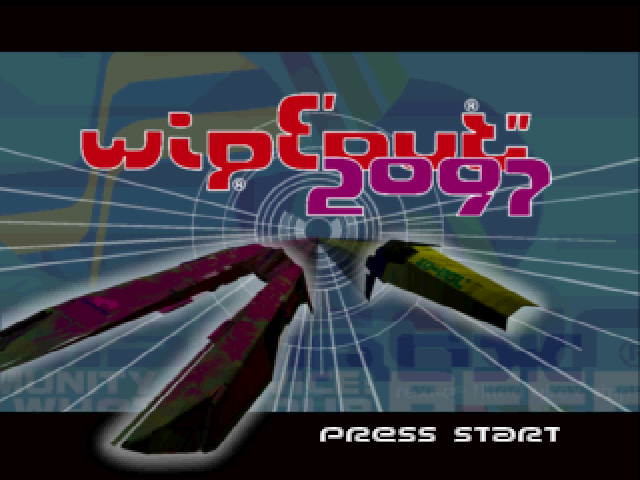
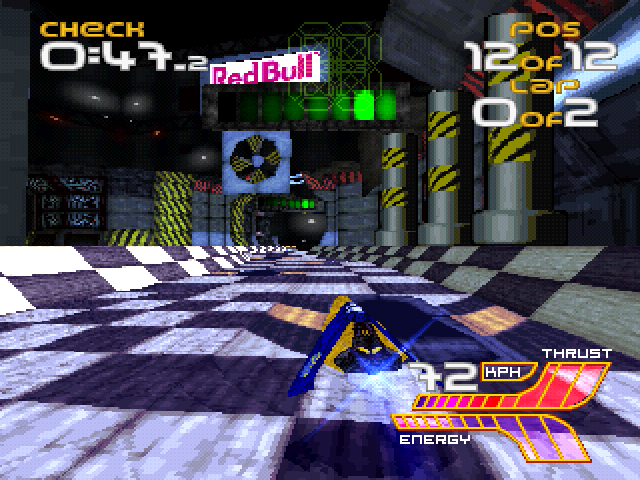
WipEout XL is the North American and Japanese title for Psygnosis’s 1996 PlayStation racing game Wipeout 2097. The second entry in the Wipeout series follows the original 1995 game into a more advanced future, placing its races in the fictional F5000 anti-gravity league of the year 2097. Psygnosis both developed and published the PlayStation release, combining science-fiction speed with a distinctly mid-1990s electronic-music and graphic-design identity. On PS1, WipEout XL presents racing not as a simulation of cars on asphalt but as a contest between hovering combat machines sweeping around elevated, enclosed and sharply banked circuits.
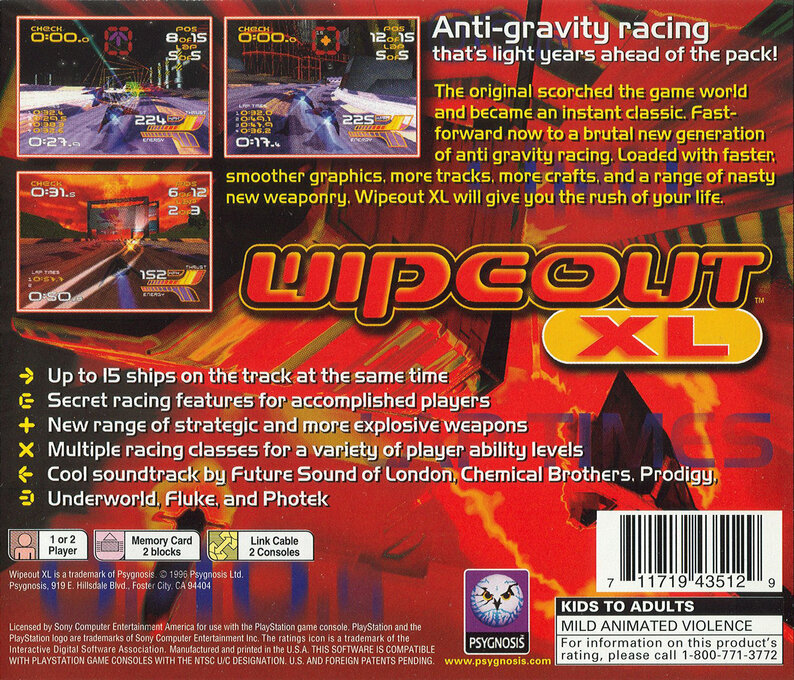
A race begins with the choice of a team and its craft. The available machines are intentionally different rather than cosmetic variations: some balance steering, shields and acceleration, while others trade a more demanding response for higher top speed. This gives team selection practical importance, especially as courses become less forgiving. The goal is straightforward—finish ahead of rival pilots—but reaching the front requires learning each track’s bends, drops, jumps and hazards. Championship events, single races, time trials and challenge-based progression provide several ways to approach the game, while stronger finishes open additional content and faster classes.
The craft skim above the track at extreme speed, and conventional driving instincts are not always enough. Air brakes are central to tight cornering, allowing a pilot to steady a ship and change direction through turns that arrive far too quickly for a simple steering correction. Collision handling also makes track discipline important: impacts cost momentum and can drain a vehicle’s defensive energy. The original PlayStation game supports the NeGcon controller, whose twisting input gave compatible players another way to steer these high-speed machines. Whether using that controller or the standard pad, successful laps depend on braking at the right moment and leaving enough space to recover from a bad line.
WipEout XL adds combat to its racing formula through weapon pads positioned around each circuit. Collecting a pickup arms the craft with an offensive or defensive item, turning a close contest into a shifting tactical battle. Attacks can disrupt or damage rival ships, but weapons do not make a pilot invulnerable. Every vehicle has a shield energy supply that is reduced by crashes and hostile fire; if it is exhausted, the craft is destroyed. A pit lane can restore the shield, but using it costs valuable time, so racers must judge whether a brief repair stop is safer than trying to protect a damaged ship through the remaining laps.
Its fiction frames the action as a far-future sporting league rather than a traditional character-led adventure. Familiar Wipeout teams including AG Systems, Auricom, FEISAR and Qirex return with their own visual identities and handling profiles, helping make the starting grid feel like a competition between corporate-backed racing outfits. The game’s courses reinforce that atmosphere with industrial structures, city-like settings and dramatic engineered roadways designed for anti-gravity vehicles. Psygnosis worked with The Designers Republic on the presentation, whose bold logos, typography and team branding became an essential part of the game’s futuristic visual language.
Music is equally important to the PlayStation experience. WipEout XL uses licensed electronic tracks alongside original music by Tim Wright, also known as CoLD SToRAGE. Its soundtrack includes contributions from artists associated with the era’s electronic scene, and the selection helps establish the racing game’s propulsive atmosphere without changing its essential focus on course reading and control. The game’s package and promotion connected the series to contemporary club culture, while its PlayStation disc could also be played as an audio CD. That combination of music, visual design and speed made the game feel closely tied to the cultural moment in which it arrived.
Although WipEout XL was made for PlayStation, Wipeout 2097 later reached Windows and Sega Saturn in 1997, followed by Amiga and Macintosh versions. The regional naming is the key distinction for this PS1 release: WipEout XL is not a separate sequel or remake, but the same 1996 game known elsewhere as Wipeout 2097. Its refined controls, varied ships, weapon combat and more approachable handling built directly on the original Wipeout while preserving the series’ demanding sense of momentum. For retro racing fans, the PlayStation version remains a defining example of how a futuristic sports concept, strong design direction and responsive arcade mechanics could meet in one cohesive game.
Gallery
Details
- Developer
- Psygnosis
- Publisher
- Psygnosis
- Genre
- Racing & Driving
- Players
- 1-2
- Release Date
- September 30, 1996
- System
- PS1