About
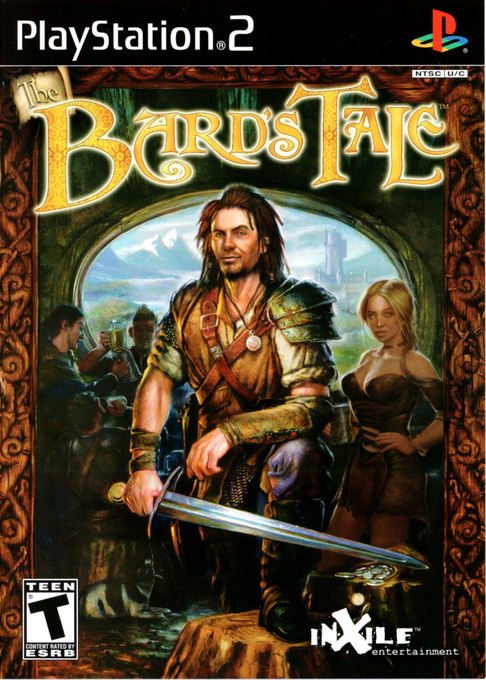
The Bard's Tale for PlayStation 2 is a 2004 fantasy action role-playing game from inXile Entertainment. Despite sharing a famous name with the 1980s computer RPG trilogy, this is a separate, comic action adventure built around one named role rather than a player-created dungeon-delving party. The PS2 release places a single, decidedly unheroic musician at the center of a 3D quest, mixing real-time combat, exploration, dialogue, and songs that summon magical help. Its irreverent tone is as fundamental to the experience as its swordplay.
The story follows the Bard, a wandering performer whose immediate ambitions are far less noble than saving a kingdom. Events draw him into a journey involving the captive princess Caleigh, a hostile cult, and the sinister Fionnaoch. A narrator constantly challenges the Bard's account of himself, making the campaign’s fantasy stakes a setting for verbal sparring as well as battles. Celtic and Orkney-inspired names give the towns and countryside a distinct flavor, while the game regularly punctures grand fantasy conventions with absurd situations, creatures, and musical interruptions.
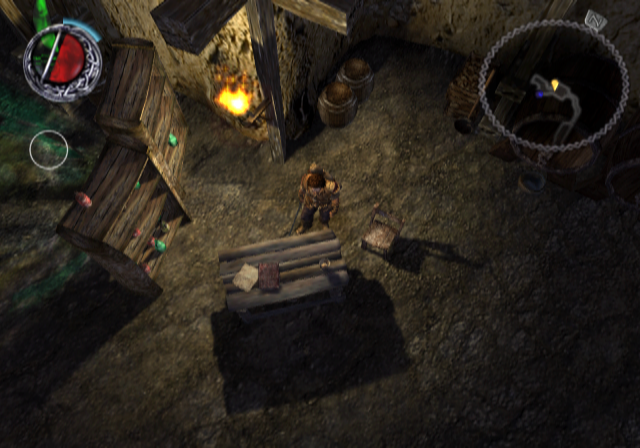
On PlayStation 2, the adventure is viewed from an elevated third-person perspective as the Bard travels through settlements, wilderness, dungeons, and quest locations. He fights directly with close-range weapons and ranged attacks, while the player manages his movement and combat in real time. Experience earned through progress improves the Bard and supports weapon-focused development. The structure is driven by quests and encounters rather than the grid-based exploration and turn-based party combat associated with the older Bard's Tale games, making this entry much closer to a console action RPG.
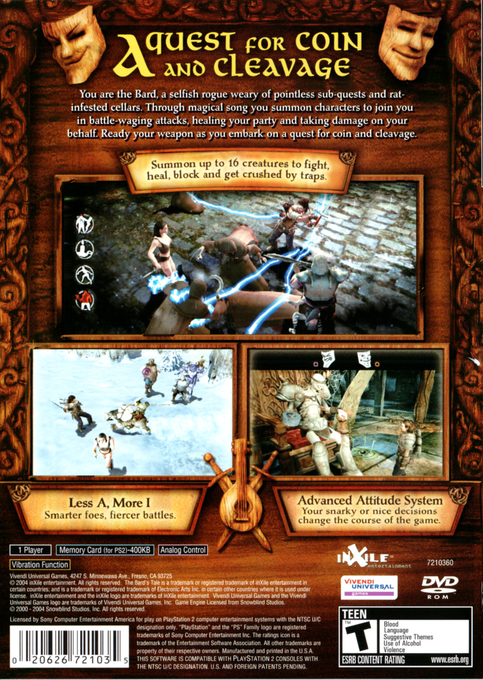
Bard Songs are the game’s defining combat mechanic. As the Bard discovers songs, he can call up supernatural companions that join fights under computer control. These summoned allies serve different purposes: some add attacks or magical offense, while others can provide support such as healing. Choosing when to use a song and keeping the Bard active with weapons creates a small traveling force without requiring the player to issue orders to a full conventional party. The system also makes music a practical part of the hero’s toolkit instead of simply a story detail.
Conversations provide another way to shape the journey’s comic character. Dialogue choices are broadly framed around a kinder response or the Bard’s more sarcastic instinct, and the selection can affect how particular scenes and people react. The labels do not spell out every line in advance, so the player is choosing the Bard’s attitude as much as a literal script response. Alongside combat, these exchanges, quests, and optional discoveries give the PS2 campaign room to play with its narrator-versus-hero premise.
The Bard's Tale arrived on PlayStation 2 and Xbox in October 2004 before later computer and mobile versions. Its console presentation used technology also associated with the Baldur's Gate: Dark Alliance games, but its writing and summoning-centered hero make it its own kind of fantasy action game. Later releases carried the adventure to additional platforms, and a remastered edition appeared under the title The Bard's Tale ARPG: Remastered and Resnarkled. For PS2 players, the original release remains a standalone, satire-minded branch of the broader Bard's Tale name rather than a continuation of the classic trilogy’s format or story.
Gallery
Details
- Developer
- inXile Entertainment
- Publisher
- Ubisoft
- Genre
- JRPG
- Players
- 1
- Release Date
- October 26, 2004
- System
- PS2