Retro Explore — Discover classic retro games
The Legend of Zelda : Ocarina of Time 3D
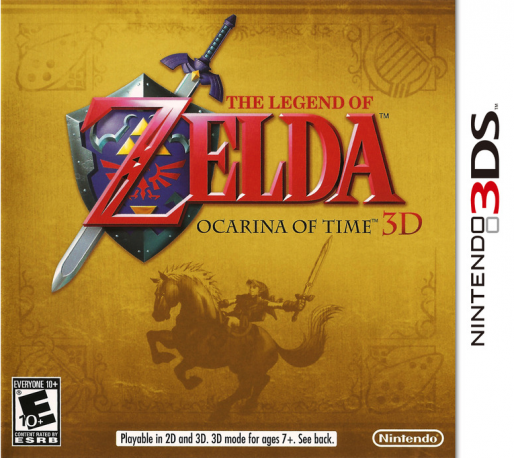
The Legend of Zelda: Ocarina of Time 3D for Nintendo 3DS is Grezzo’s 2011 remake of Nintendo’s 1998 Nintendo 64 action-adventure. Published by Nintendo, it returns Link’s journey through Hyrule with rebuilt visuals, stereoscopic 3D presentation, and a control layout designed around the handheld’s two screens. The story and broad structure remain those of the original game, but the 3DS edition revises its presentation and several player-facing systems for a new portable format. Link begins as a boy in Kokiri Forest after the Great Deku Tree calls on him to leave his secluded home. His travels bring him to Hyrule Castle, where Princess Zelda warns him about Ganondorf, leader of the Gerudo. The pursuit of the sacred Triforce sends Link across Hyrule’s fields, towns, lakes, mountains, and deserts. With the fairy Navi as a guide, he enters temples, meets the peoples of the kingdom, and uses the Master Sword to move between childhood and adulthood. That change in time is central to both the adventure’s plot and its progression, opening new paths and changing the state of Hyrule. At its core, Ocarina of Time 3D combines exploration, puzzle-solving, dungeon crawling, and real-time sword combat. Link carries a sword and shield, collects equipment, and assigns tools such as the slingshot, boomerang, bombs, and hookshot to item buttons. Targeting lets players keep an enemy or point of interest in view while attacking, defending, or maneuvering. Dungeons build around finding keys, solving environmental puzzles, gaining a specialized item, and confronting a boss, while the wider world steadily expands as Link acquires abilities that remove earlier obstacles. Music is an important mechanic rather than only a backdrop. Link learns melodies for his ocarina, and playing them can summon effects, alter the time of day, reveal routes, or help him travel. The 3DS touch screen keeps maps, gear, and item management readily available, and it can display the ocarina interface when a song is needed. First-person aiming with several projectile tools can use the system’s gyro sensor, allowing the player to move the Nintendo 3DS to look and aim; conventional controls remain available for players who prefer them. This version’s visual upgrade gives characters and environments new models, textures, lighting, and depth while preserving the layout and scenario of the Nintendo 64 game. The stereoscopic display is optional, and the portable hardware gives Hyrule a different rhythm from its console predecessor. Interface changes make frequently used information easier to reach, and the Water Temple received adjustments intended to make its water-level management less cumbersome. Sheikah Stones offer short hint visions for players who want guidance without replacing the game’s exploration and experimentation. The Legend of Zelda: Ocarina of Time 3D also includes a second quest based on Ocarina of Time Master Quest. This alternate campaign rearranges dungeon puzzles and presents a mirrored version of the world, so knowledge of the main adventure does not simply supply every answer. After completing the main game, Boss Challenge lets players revisit bosses individually or take on a sequence of encounters. Those additions distinguish the remake from a straightforward visual conversion and give returning players another way to test their understanding of the game’s tools and dungeons. As an entry in The Legend of Zelda series, the game places familiar ideas such as the Triforce, Hyrule, Princess Zelda, and Link’s heroic role at the center of a large connected adventure. Its 3DS release arrived more than a decade after the original Nintendo 64 version, retaining the original quest while adapting its camera, inventory handling, aiming, and presentation for Nintendo’s glasses-free 3D handheld. For players seeking The Legend of Zelda: Ocarina of Time 3D specifically, it is the 3DS remake with the original adventure, the revised Master Quest, and handheld-focused features gathered in one single-player release.
Donkey Kong Country Returns 3D
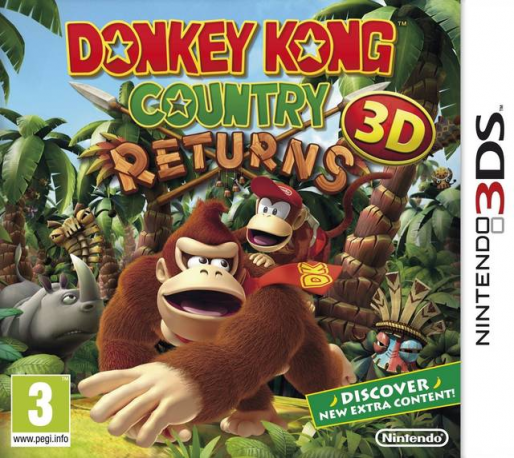
Donkey Kong Country Returns 3D brings Nintendo’s 2010 Wii platform adventure to Nintendo 3DS, where it arrived in 2013 as an enhanced portable edition developed by Monster Games and published by Nintendo. Donkey Kong and Diddy Kong return to Donkey Kong Island after the musical Tiki Tak Tribe hypnotizes its animal inhabitants and makes off with DK’s banana hoard. The result is a side-scrolling action platformer built around forward momentum, precise timing, and a long journey through the island’s varied regions. Its stereoscopic presentation gives the 2D action additional depth on compatible 3DS systems, while the adventure can also be played in standard 2D. The central challenge is to guide the Kongs from a level’s entrance to its goal, jumping over hazards, rolling through enemies, climbing, grabbing vines, and using barrels to cross dangerous terrain. In single-player, Diddy rides on Donkey Kong’s back after being freed from a DK Barrel. His Barrel Jet extends their time in the air, which is especially useful for wide gaps and demanding platform sequences. Donkey Kong can ground pound, carry and throw barrels, and perform a rolling attack, while Diddy adds a Peanut Popgun to the pair’s toolset. Players may choose either the Circle Pad or the +Control Pad for movement. The route across the island shifts between jungles, beaches, ruins, caves, cliffs, factories, and a volcano, with each stage introducing its own obstacles and set pieces. Mine-cart rides require quick jumps and ducking, Rocket Barrel sections turn flight into a timing test, and Rambi the rhinoceros can smash through barriers when found in certain levels. Barrel Cannons send the Kongs through the air, sometimes automatically and sometimes at the player’s command. Alongside reaching the goal, every stage invites closer exploration through four K-O-N-G letters, concealed Puzzle Pieces, bonus stages, and other secrets. Banana Coins collected during play can be spent at Cranky Kong’s shop on useful supplies. Donkey Kong Country Returns 3D preserves an Original Mode that follows the Wii game’s two-heart rule, but adds a more forgiving New Mode. New Mode gives each Kong three hearts and expands the selection of shop items, including aids for falls and protection for Mine Carts and Rocket Barrels. Both modes include the 3DS edition’s new stages, so the added content is not restricted to the easier setting. Players who want a different kind of challenge can unlock Time Attack for cleared stages and try to improve their completion times. The game also retains Super Guide support for single-player: after repeated failures, Super Kong can demonstrate a route through a level, although the player must collect its hidden rewards personally. A second player can join through 3DS Local Play, with one person controlling Donkey Kong and the other controlling Diddy Kong. This cooperative option needs a 3DS system and a copy of the game for each player, and it changes the partnership from Diddy’s support role into simultaneous two-character play. The 3DS release is therefore more than a straight conversion of Retro Studios’ Wii game: it adapts the controls for handheld hardware, adds stereoscopic visuals and new levels, and offers two approaches to difficulty. As part of the Donkey Kong Country series, it combines familiar banana collecting, animal assistance, barrel-launching, and secret hunting with the Tiki Tak Tribe story introduced in the original Returns adventure.

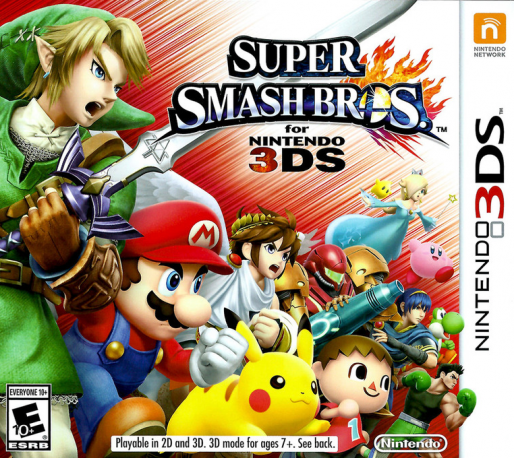
Super Smash Bros. for Nintendo 3DS
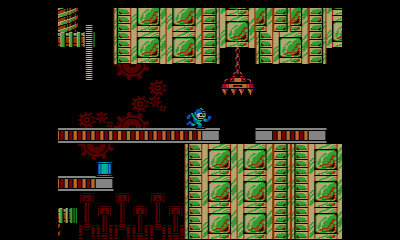
Super Smash Bros. for Nintendo 3DS is Nintendo’s 2014 portable entry in its crossover fighting series, developed with Bandai Namco Studios and Sora and published by Nintendo. Released first in Japan in September 2014 and in North America and Europe that October, it brings Nintendo characters and invited guests together for matches built around movement, positioning, and ring-outs rather than conventional health bars. Mario, Link, Pikachu, Kirby and many other returning fighters share the roster with newcomers such as Villager, Mega Man, Pac-Man, Little Mac, Greninja and the customizable Mii Fighters, turning the 3DS into a compact arena for clashes between game worlds. A battle starts with each fighter at zero percent damage. Strikes, throws, special moves, stage hazards and items raise that percentage; the higher it becomes, the more forcefully the next solid hit can launch the target. Players use the Circle Pad to move, jump and shield, while normal attacks, special attacks, grabs and charged Smash attacks give every fighter a different set of options. Winning depends on staying on the platform while sending rivals beyond a stage’s side, top or bottom boundary. Timed and stock rules, items, Final Smashes, Assist Trophies and stage hazards let matches range from brisk competitive duels to deliberately unpredictable group fights. The Nintendo 3DS version was designed as a distinct game rather than a reduced copy of the simultaneously developed Wii U release. Its new stages draw chiefly from handheld series and games, and its optional stereoscopic 3D presentation includes character outlines intended to keep the action readable on the small screen. Every stage also has an Omega form that removes its usual terrain and hazards in favor of a flat Final Destination-style layout. Custom Fighters allow players to alter a character’s special moves and equip collected power-ups, while Mii Fighters can be created in Brawler, Swordfighter and Gunner styles. A New Nintendo 3DS can also use its C-Stick for Smash attacks; the Circle Pad Pro is not supported. Smash Run is the version’s signature solo-and-local mode. A player spends five minutes exploring a large maze-like area, defeating enemies from Nintendo and partner series to collect temporary stat boosts, then takes that strengthened fighter into a randomly selected final event. The conclusion might be a standard battle, a race, or another rule-driven contest, so the power-ups collected during exploration matter in different ways each time. StreetSmash uses StreetPass in a separate top-down token game, asking players to bump opposing tokens from the board. Classic, All-Star, Stadium challenges, Trophy Rush and the wider collection of trophies and customization parts provide further objectives beyond ordinary Smash matches. For multiplayer, Super Smash Bros. for Nintendo 3DS supports battles for up to four players through local wireless when each player has a copy of the game. It originally also offered online matches and spectator features, but Nintendo Network service for the Nintendo 3DS ended in April 2024, so those network functions are no longer available. The 3DS game can exchange compatible custom fighters and customization data with its Wii U counterpart, yet the two versions have separate stages and exclusive modes; Wii U-only features such as eight-player battles are not part of the handheld release. Downloadable fighters, stages and costumes expanded the game after launch, although new Nintendo 3DS eShop purchases are no longer possible. As the fourth main Super Smash Bros. release, Super Smash Bros. for Nintendo 3DS followed Super Smash Bros. Brawl and marked the series’ first appearance on a dedicated handheld. Its broad mix of Nintendo history and third-party guests, portable local competition, and 3DS-specific Smash Run gave it its own identity beside the Wii U edition. The game was later succeeded by Super Smash Bros. Ultimate on Nintendo Switch, but its focus on four-player handheld battles, personal fighter customization and StreetPass-era extras remains specific to the Nintendo 3DS library.