About
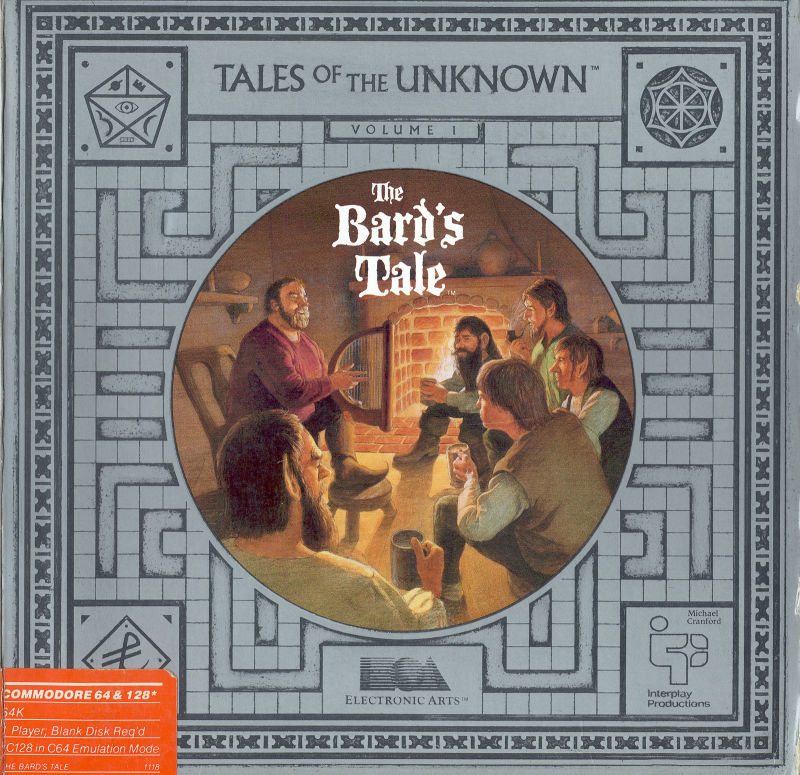
The Bard's Tale: Tales of the Unknown for Commodore 64 is a fantasy role-playing game from Interplay, published by Electronic Arts in 1986. The first entry in the Bard's Tale series places a newly assembled band of adventurers in Skara Brae, a city cut off by Mangar the Dark's spell of Eternal Winter. Monsters now fill the streets and the town guard has vanished, leaving the party to investigate the city, survive its underworld, and ultimately challenge the wizard responsible. Its original packaging presented the game as Tales of the Unknown, Volume I; the success of this opening adventure soon made The Bard's Tale the series name players knew best.
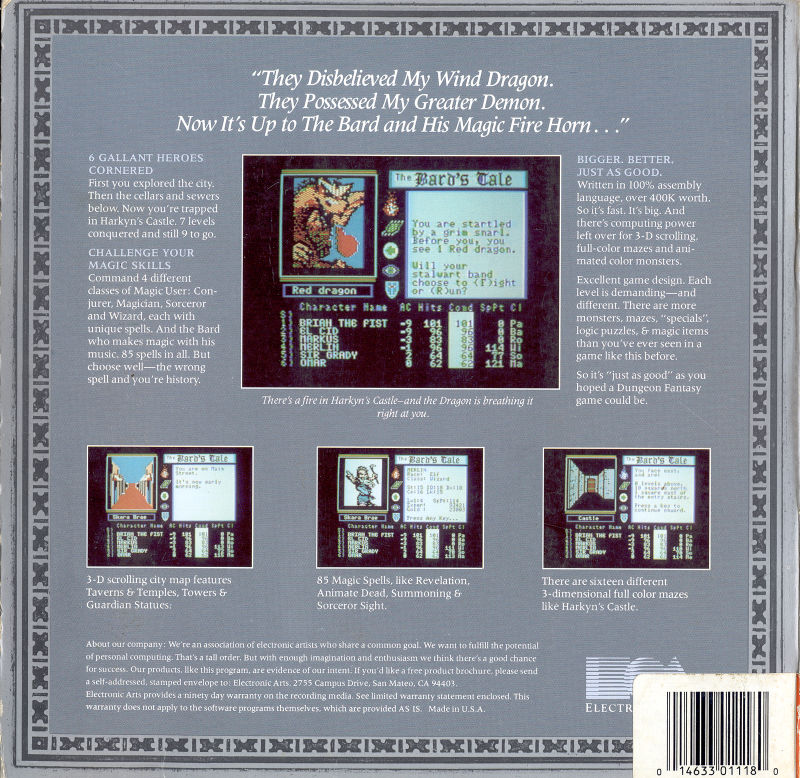
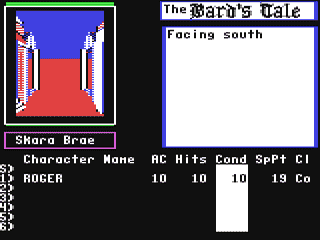
Play begins at the Adventurer's Guild, where the player creates and organizes a party of up to six characters. The available professions include the combat-oriented warrior, paladin, monk, hunter, and rogue, alongside bards and the spellcasting magician and conjurer. The party's strength comes from its combination of roles: fighters form the front line, rogues can handle certain dangers, and magic users bring spells to battles and exploration. As characters earn experience and rise in level, magicians and conjurers can change to more advanced magical classes, eventually gaining access to a larger body of spells. Equipment bought with gold, improved statistics, and the careful arrangement of the party all matter when facing increasingly formidable opponents.
The Commodore 64 game is a first-person dungeon crawler viewed through a pseudo-3D window. Players direct the group through streets, taverns, temples, cellars, sewers, catacombs, castles, and towers, while keeping notes or drawing maps to make sense of its maze-like spaces. Skara Brae is more than a menu of shops: its buildings supply services, information, recovery, equipment, and routes into the quest. Exploration is punctuated by random monster encounters and by riddles, locked passages, teleports, magical barriers, and items needed to open later areas. Progress therefore combines party-building and combat with discovering the sequence of locations and clues that leads toward Mangar's tower.
Combat is turn-based and text-led, with the party selecting attacks, defensive choices, spells, songs, and other actions against enemy groups. Magic is central to both survival and puzzle solving; the original game uses abbreviated spell commands, while the printed documentation identifies their effects. The bard is the feature that gives The Bard's Tale its particular identity. Bards perform magical songs that can strengthen the party or assist it beyond a single fight, and some obstacles specifically require their music. This makes a bard more than a fantasy-themed character class: choosing one affects the tools available to the entire expedition. Frequent battles provide the experience and money needed to prepare for deeper dungeons, but the game also expects players to decide when to retreat, restock, and return better prepared.
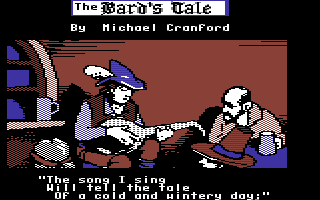
Designed by Michael Cranford with additional design associated with Interplay founder Brian Fargo, The Bard's Tale arrived during an important period for home-computer role-playing games. Its party-based structure and first-person mazes share a lineage with earlier dungeon RPGs, but its colored presentation, city exploration, bard songs, and accessible interface helped it stand out on the Commodore 64. The game was followed by The Bard's Tale II: The Destiny Knight and The Bard's Tale III: Thief of Fate, allowing its world and character-building approach to grow into a trilogy. For Commodore 64 players, Tales of the Unknown remains a substantial early computer RPG built around mapping, resource management, spell use, and the gradual transformation of an inexperienced party into Skara Brae's last defense.
Gallery
Details
- Developer
- Interplay
- Publisher
- Electronic Arts
- Genre
- JRPG
- Players
- 1
- Release Date
- January 1, 1986
- System
- Commodore 64